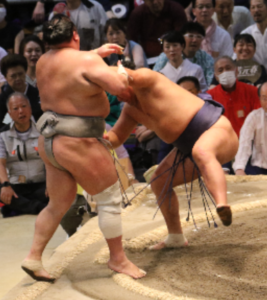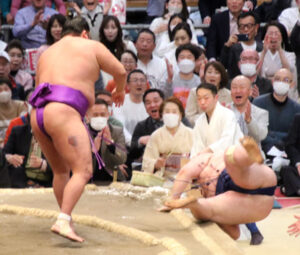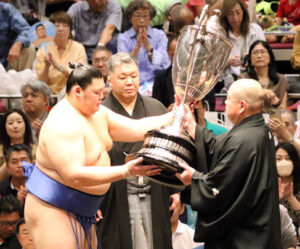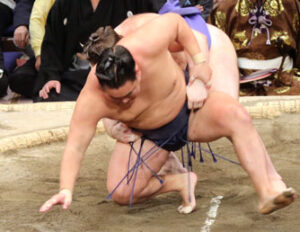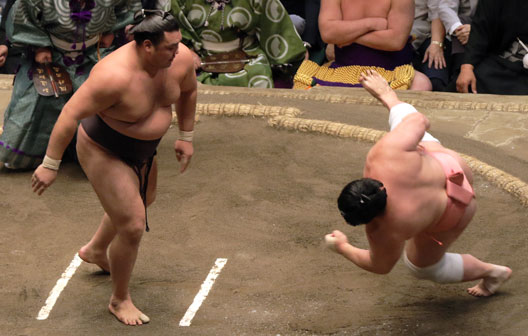
A yusho is the championship of a sumo tournament — won by the wrestler with the best win–loss record across the fifteen days. Each of sumo’s six divisions crowns its own champion, but the one that defines a career is the top-division (makuuchi) title, whose winner lifts the Emperor’s Cup. When two or more wrestlers finish level, the title is settled by a playoff on the final day.
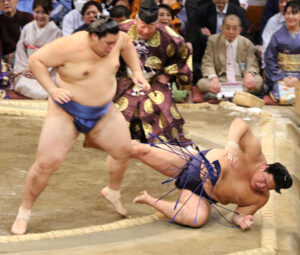
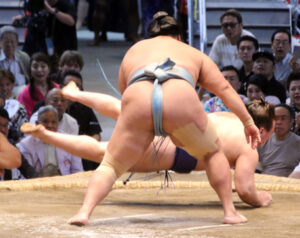
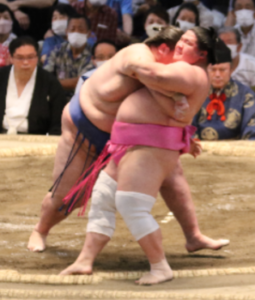
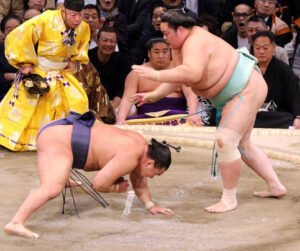
Photo by Michihiro Taguchi.
What a yusho is
“Yusho” simply means the tournament championship. Across the fifteen days of a honbasho, every wrestler fights once a day, and the one who finishes with the most wins takes the yusho for his division. There is no points system and no bracket — the championship is decided by a plain win–loss record, which is part of what makes sumo so easy to follow. Eight wins keeps a wrestler climbing; fifteen, a perfect run, is the rarest result of all.
The Emperor’s Cup and the makuuchi yusho
When fans talk about “the yusho,” they almost always mean the top-division title. The makuuchi champion is handed the Emperor’s Cup at the closing ceremony, the trophy that anchors every wrestler’s ambitions and the image that travels around the world each tournament. Lifting it is the single clearest statement of supremacy in the sport — a yokozuna is expected to contend for it, and a lower-ranked winner can rewrite his whole career in fifteen days. The path to it runs through the rankings: how a title reshapes a wrestler’s standing is set out in our guide to the banzuke, and repeated championships are the core of the case for promotion to yokozuna.
Every division crowns a champion
The makuuchi title gets the cameras, but a yusho is awarded in all six divisions, from the entry-level jonokuchi up through jonidan, sandanme, makushita and juryo to the top. For a young wrestler climbing the ladder, a lower-division yusho is a real marker of progress and often a sign that a bigger name is on the way. Many of today’s stars first announced themselves with a championship far below the salaried ranks before they ever reached the bright lights of the top division.
How ties are settled — the playoff
Because the title comes down to a simple record, ties happen. When two or more wrestlers finish the fifteen days level at the top, the championship is decided by a playoff — a deciding bout (or bouts) held on the final day, after the regular matches are done. It is sudden-death drama: months of a tournament can hinge on a single push at the edge of the ring. Some of the sport’s most famous afternoons have been these final-day playoffs, where rank counts for nothing and only the next win matters.
The most decorated champions
No one has won more top-division titles than the yokozuna Hakuho, whose 45 championships stand far ahead of the field. Sixteen of those were zensho yusho — perfect 15–0 runs — the most punishing version of a championship there is. The great names of every era are measured against this count, and the chase for it is a story that runs through the whole history of the sport. For how the rarest of all — the flawless title — has been achieved, our piece on the perfect championship tells the fuller tale.
When the rank-and-file win
A yusho is not reserved for the men at the top. Now and then a maegashira — a rank-and-file wrestler in the lower half of the top division — runs hot for fifteen days and walks away with the Emperor’s Cup, one of the most thrilling upsets sport can offer. These breakout titles have become a hallmark of the current era, and several of today’s most talked-about wrestlers first made their name with exactly this kind of run. A few of those championship stories are gathered below.
The yusho and the special prizes
One thing the yusho is not: a popularity award. Separate from the championship itself, three special prizes (the sansho) reward standout wrestlers in the top division who did not win the title — for an outstanding performance, for fighting spirit, and for technique. They are a way of honouring the men who shaped a tournament without lifting the cup, but they sit alongside the yusho, never above it. The championship remains the one result that defines a basho.
Championship stories
The clearest way to understand a yusho is to watch one happen. These first-title runs show what the championship looks like from the inside — from a yokozuna sealing his rise to a newcomer stunning the field:
- Onosato’s record-fast first championship
- How Hoshoryu won his first title and sealed ozeki
- Takerufuji, the rookie who won the 2024 March title
- Kotozakura’s first championship
- Kotoshoho’s instant title at the 2025 Nagoya basho
- Aonishiki, the Ukrainian who broke through in Fukuoka
Frequently Asked Questions
What does yusho mean in sumo?
Yusho is the Japanese word for the tournament championship. It goes to the wrestler with the best win–loss record over a tournament’s fifteen days. Each division has its own yusho, but the top-division (makuuchi) title is the one most people mean.
What does the makuuchi champion win?
The top-division champion lifts the Emperor’s Cup, the trophy that symbolises the sport’s highest prize. It is presented at the closing ceremony on the final day of the tournament.
What happens if two wrestlers tie?
If two or more wrestlers finish level with the best record, the championship is decided by a playoff — a deciding bout held on the final day, after the regular matches. The winner takes the title.
Who has won the most championships?
The yokozuna Hakuho holds the record with 45 top-division titles, well clear of anyone else. Sixteen of them were zensho yusho — perfect 15–0 championships.
Can a low-ranked wrestler win the yusho?
Yes. A maegashira — a rank-and-file wrestler in the lower part of the top division — can win the championship with a hot fifteen days, and these upset titles have been a feature of the current era. It is one of the most dramatic things that can happen in a tournament.
▶ Read next: Honbasho: the six grand tournaments · Zensho yusho: the perfect championship · How the banzuke works · Promotion to yokozuna