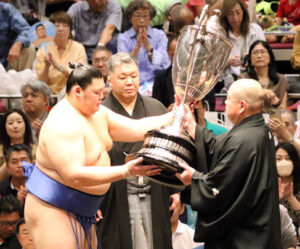
Takerufuji is the Isegahama-stable wrestler who won the 2024 March Grand Sumo Tournament in his debut top-division basho — the first such title since the official championship system began in 1926. He did it on an injured leg, driving out Gonoyama on the final day. This guide explains who Takerufuji is, the fast rise that brought him to the top, and how that historic championship was won.
Key Takeaways
- Takerufuji (real surname Ishioka) wrestles for Isegahama stable under former yokozuna Asahifuji. At his top-division debut he stood 184 cm, 143 kg, age 24, a pushing-thrusting specialist.
- He reached the top division in just eight tournaments from the bottom, with no losing record along the way.
- He won the 2024 March basho on the final day, beating Gonoyama on fighting spirit despite a leg injury from the day before.
- It was the first debut top-division championship since the official championship system was established in 1926.
- Across the tournament he beat two ozeki, one sekiwake and one komusubi — including ozeki Kotonowaka on Day 11 — putting the title beyond dispute.
Who is Takerufuji?
Takerufuji is a Japanese wrestler from Aomori Prefecture who competes for Isegahama stable, run by the former yokozuna Asahifuji. His real surname is Ishioka — he fought under “Ishioka” in maezumo, the unranked preliminary stage, and took the shikona Takerufuji from the jonokuchi division upward. Searchers sometimes spell the name “Takerafuji,” but the correct reading is Takerufuji.
He joined Isegahama in August 2022 after graduating from Nihon University, drawn in part by an Aomori connection through the stable’s training camps in his home prefecture. At his top-division debut he stood 184 cm and weighed 143 kg, aged 24, and he fights as a tsuki-oshi specialist — a pusher-thruster who wins with thrusts to the chest and throat rather than belt work.
| Profile | Detail |
|---|---|
| Real surname | Ishioka |
| Shikona | Takerufuji |
| Stable | Isegahama (master: former yokozuna Asahifuji) |
| Joined | August 2022, after Nihon University |
| At top-division debut | 184 cm, 143 kg, age 24 |
| Style | Tsuki-oshi (pushing-thrusting) |
The fast rise to the top division
What makes Takerufuji famous is the speed of his climb. He reached the top division, makuuchi, in just eight tournaments from jonokuchi, the bottom rung — and he never posted a losing record (make-koshi) along the way. In the second-highest division, juryo, he won the championship and cleared the division in a single tournament, then carried that momentum straight into his historic top-division debut.
The foundation was laid early. Takerufuji practiced sumo from childhood, competed in the Hakuho Cup in junior high, and attended the sumo powerhouse Tottori Johoku High School before going on to Nihon University, where he was a teammate of Kiho in the sumo club. By the time he turned professional, the amateur grounding was already deep.
An injured leg and the question that hung over Osaka
The final day of the 2024 March basho unfolded at the Osaka Prefectural Gymnasium, where the competition floor sits on the second level and above. On the upper-floor passage, media had gathered, trading scraps of information about a single question: would Takerufuji, who had injured his leg the day before, withdraw or compete?
It was not a small decision. A long career weighed against the risk of forcing himself onto the dohyo while hurt, and on that calculation a withdrawal might have been the wiser choice. There was genuine doubt he could wrestle on the leg at all. For a man competing in his debut tournament in makuuchi — the top division — the stakes pulled in opposite directions.
What a withdrawal would have meant
Had Takerufuji pulled out, the title would have hinged on the bout immediately before the final: Onosato, carrying three losses, against the ozeki Hoshoryu. (Ozeki, sekiwake and komusubi are the titled ranks that sit just below yokozuna.) If Onosato lost that match, the absent Takerufuji would take the championship. If Onosato won, the trophy was his. Everything in the tournament threatened to ride on a bout Takerufuji would only watch.
The bout against Gonoyama, won on spirit
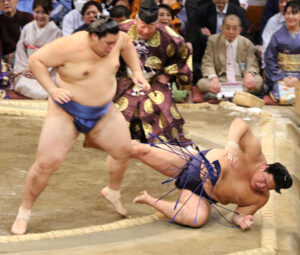
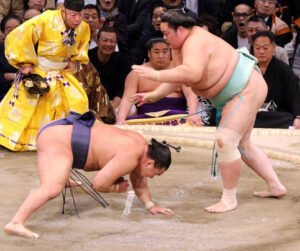
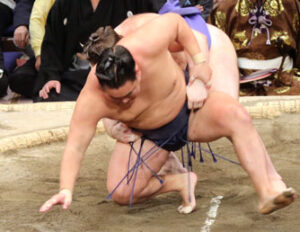
In the end, Takerufuji competed. He appeared for the top-division ring-entering ceremony, and the man waiting across the clay was Gonoyama — powerful, which made the bad leg a real worry. What followed owed more to will than to craft. The bout turned on spirit rather than technique: on sheer fighting spirit, Takerufuji drove Gonoyama out of the ring.
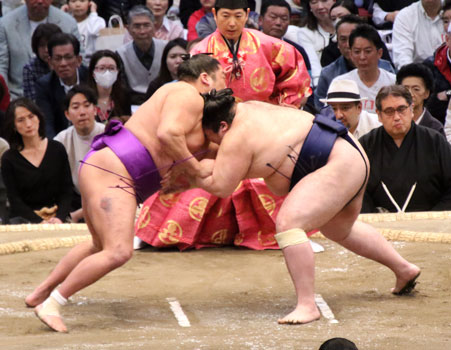
The arena erupted. A wrestler who, the night before, might not have set foot on the dohyo had instead pushed a strong opponent over the straw.
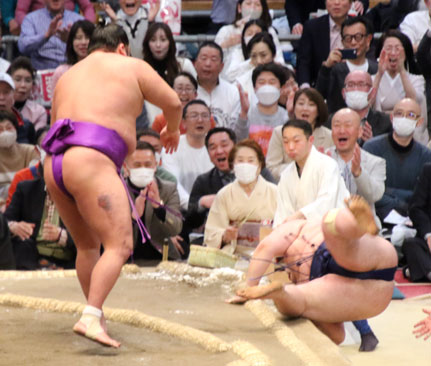
The historic weight of a debut-division title — and the quiet final bout
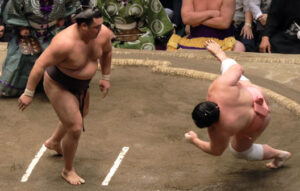
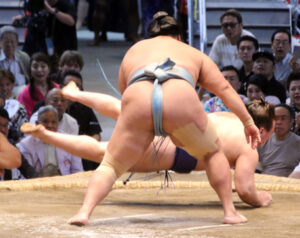
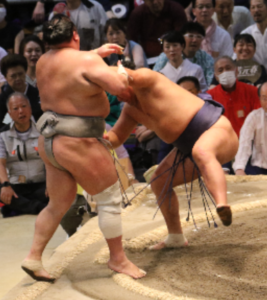
This was a debut-division championship, and not one with an asterisk. Takerufuji had faced two ozeki, one sekiwake and one komusubi across the fortnight — the full weight of the titled ranks — which left the title beyond dispute. One of those ozeki wins came on Day 11, when he beat Kotonowaka by a quick force-out to move to 11-0. It was the first debut top-division championship since the official championship system was established in 1926.
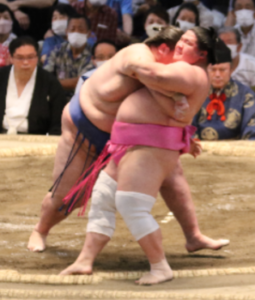
The match the building had been bracing for, Onosato against Hoshoryu, came after the title was already settled. Hoshoryu won it with an underarm throw, the shitatenage, handing Onosato a fourth loss. The result decided nothing; the climax of the tournament had already passed, earlier in the card, with Takerufuji. Onosato would soon claim his own first championship, but on this day the spotlight had already moved.
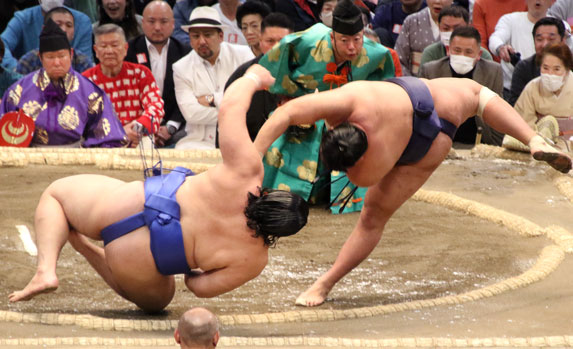
There was a final, telling detail. Both Takerufuji and Onosato were still so new to the upper ranks that neither could yet tie the oicho-mage, the elaborate ceremonial topknot. And yet these two had carried the tournament between them, overshadowing the established ozeki on the banzuke.
Frequently Asked Questions
Who is Takerufuji?
Takerufuji is a sumo wrestler from Isegahama stable, run by former yokozuna Asahifuji. His real surname is Ishioka. He reached the top division in just eight tournaments and won the 2024 March tournament in his debut top-division basho.
What is Takerufuji famous for?
He is famous for winning the 2024 March Grand Sumo Tournament in his debut top-division tournament — the first such championship since the official system began in 1926 — and for climbing from the bottom to the top division in only eight tournaments with no losing record.
What stable and style does Takerufuji have?
He belongs to Isegahama stable and fights as a tsuki-oshi specialist, a pusher-thruster. At his top-division debut he stood 184 cm and weighed 143 kg, aged 24, and joined the stable in 2022 after Nihon University.
Why was Takerufuji’s championship considered historic?
It was the first debut top-division championship — a title won in a wrestler’s very first top-division tournament — since the official championship system was established in 1926.
Was the title weakened by the injury or an easy draw?
No. Takerufuji faced two ozeki, one sekiwake and one komusubi during the tournament, including a Day 11 win over ozeki Kotonowaka, which left the championship beyond dispute.
What happened in the Onosato versus Hoshoryu bout?
That bout came after the title had already been settled. Hoshoryu won it with an underarm throw, the shitatenage, handing Onosato a fourth loss, so the result decided nothing.