Guide– category –
-

How to See Sumo in Tokyo When No Tournament Is On
Grand sumo comes to Tokyo on forty-five days a year, and only those days put ranked wrestlers on the ring at the Ryogoku Kokugikan. If your trip falls on any of the other three hundred or so days, or if the tournament you wanted is sold ... -
Sumo Salary by Rank: Reported Pay and How to Read It
Juryo is the dividing line between a regular sumo salary and the allowance system below it. Our Japanese archive reports a monthly salary scale of ¥3,000,000 for a yokozuna down to ¥1,100,000 for a juryo wrestler, introduced in January 2... -
Kesho-mawashi: Sumo’s Ceremonial Apron, and What One Costs
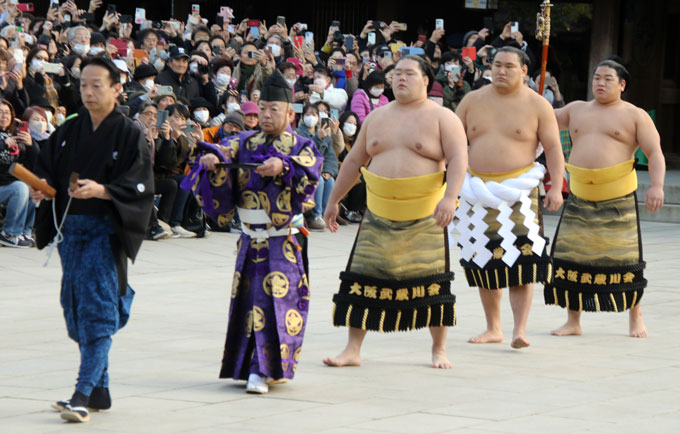
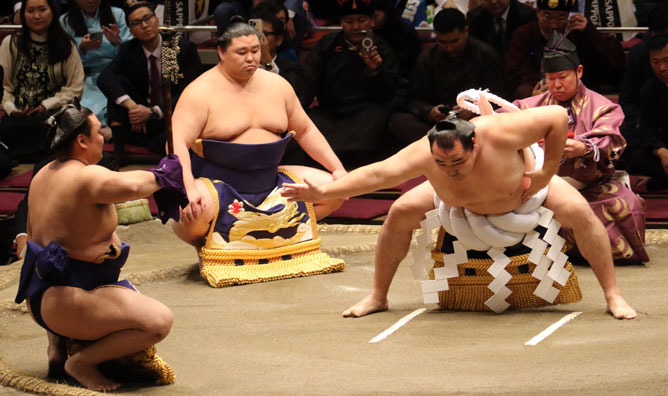
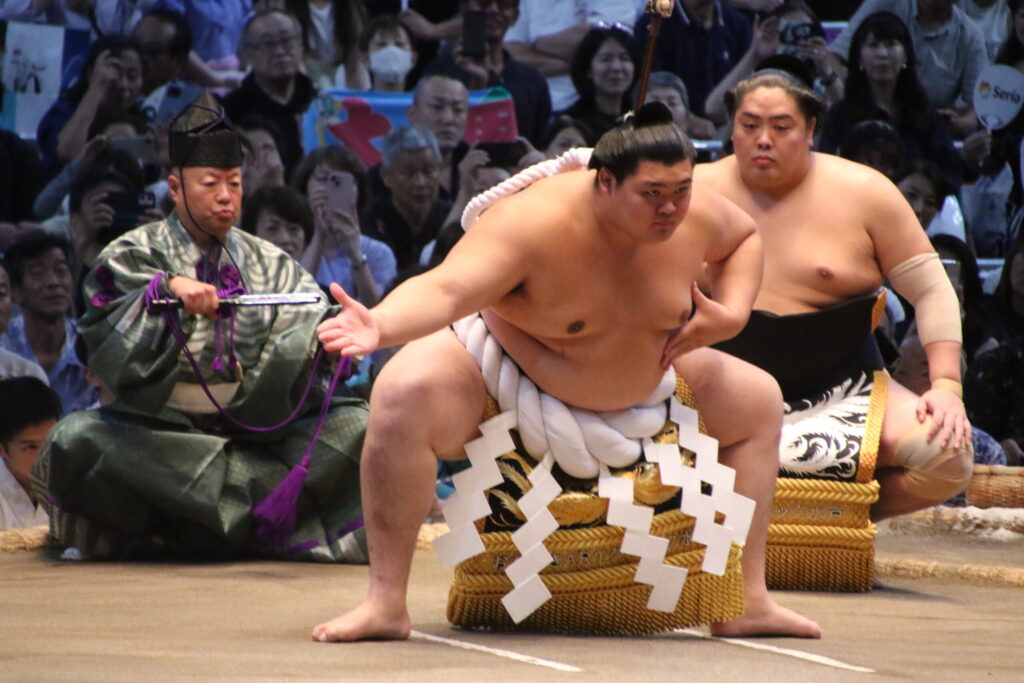
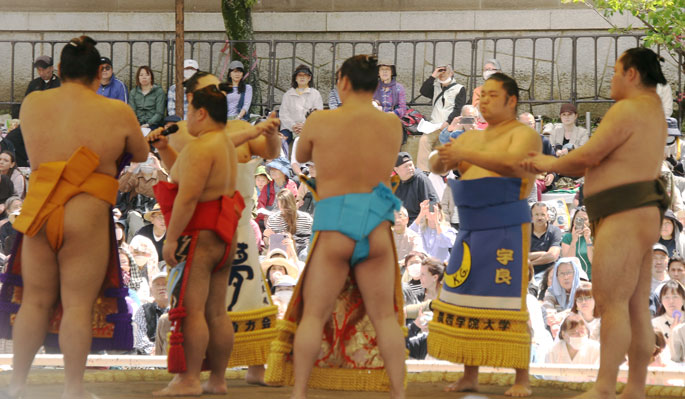
A kesho-mawashi is the embroidered silk apron a sumo wrestler wears for the ring-entering ceremony, and the Japan Sumo Association puts the cost at upwards of approximately one million yen. It is not the belt used in bouts. Nobody grappl... -
Kyujo: What Happens When a Sumo Wrestler Sits Out a Tournament
Kyujo is the word for sitting out of a grand tournament. A wrestler who withdraws, whether before the tournament starts or partway through it, is kyujo for the days he misses, and every missed day goes into the official record as a loss.... -
What Do Sumo Wrestlers Wear? Every Piece of Sumo Clothing, by Rank
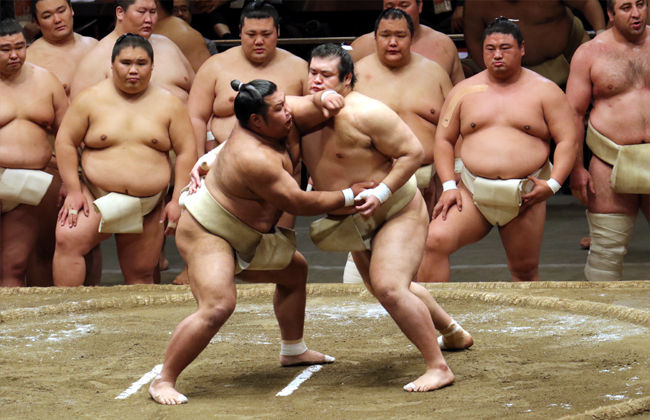
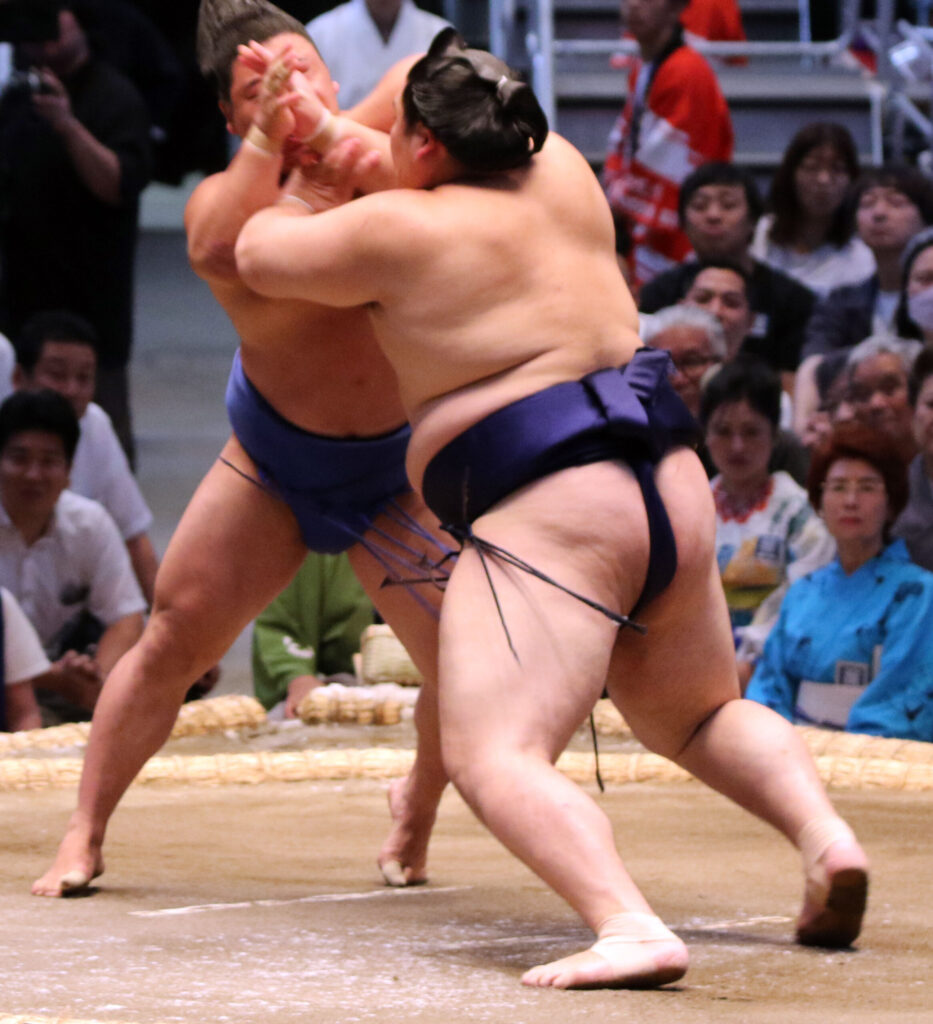
In a bout, a sumo wrestler wears exactly one thing: the mawashi, a silk or cotton belt wound around the waist and between the legs. The Japan Sumo Association describes the competition belt as heavy silk about 9 metres long and 80 centim... -
Tokoyama: The Sumo Hairdressers Who Tie Every Topknot
A tokoyama is a professional hairdresser employed by the Japan Sumo Association to comb, oil and tie the hair of sumo wrestlers. They are salaried members of the Association, not freelancers, and each one is attached to a stable rather t... -
Sumo Terms Explained: A Glossary of 50+ Words
This is a plain-English glossary of the sumo terms you actually hear. Sumo keeps its Japanese vocabulary untranslated, so a broadcast throws thirty unfamiliar words at a new viewer in twenty minutes. Below, every term is given in romaniz... -
Kadoban: The Rule That Can Cost an Ozeki His Rank
Kadoban is the tournament in which an ozeki's rank is on the line. An ozeki who finishes a tournament with a losing record enters the next one as kadoban. If he posts a winning record there, the flag is cleared and nothing happens. If he... -
Hakkeyoi and Nokotta: What the Sumo Referee Shouts
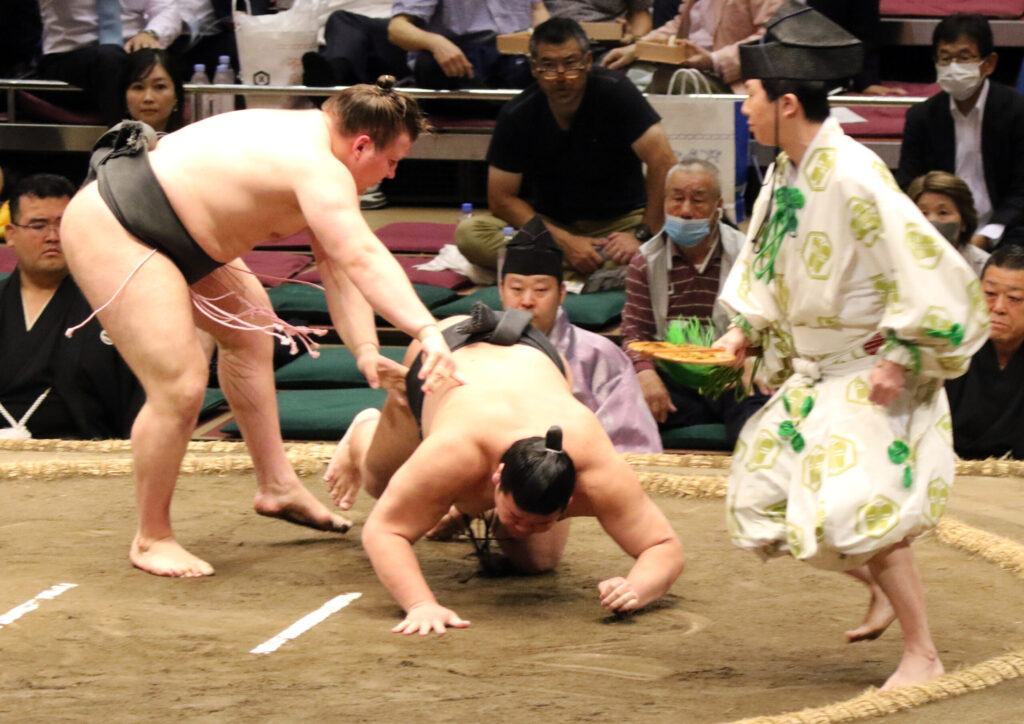
"Nokotta" means "still in" and "hakkeyoi" is a call to get moving. The referee shouts nokotta, nokotta while the two wrestlers are actively fighting, to tell them the bout is still live and neither has been put out. He switches to hakkey... -
Jungyo: Sumo’s Regional Tours Between the Grand Tournaments
Jungyo are sumo's regional exhibition tours, held in the gaps between the six grand tournaments. They bring the sport to towns across Japan and sometimes abroad, mixing exhibition bouts with morning training and close fan interaction. Re...