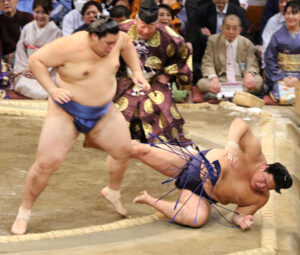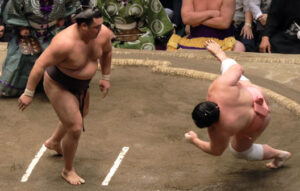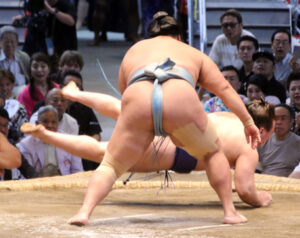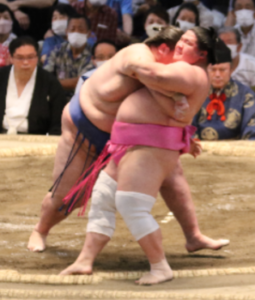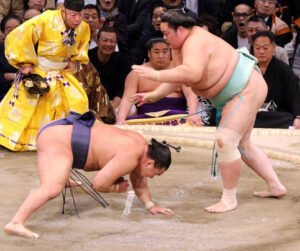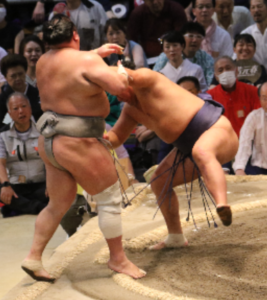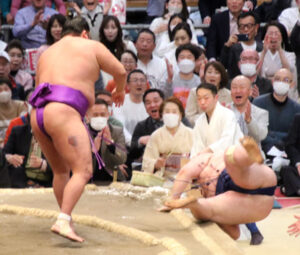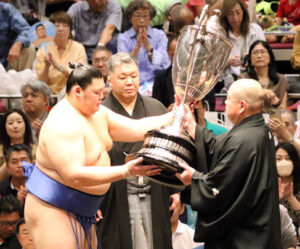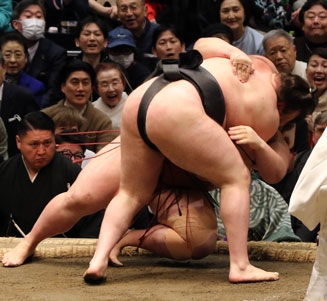
On the final day of the 2026 January tournament, Aonishiki forced out ozeki Kotozakura to set up a championship playoff with Atamifuji, then threw his rival over with a left-handed kubinage at the edge of the ring to clinch back-to-back titles.
The drama at this year’s Hatsu Basho did not announce itself in advance. When the tournament began, almost no one had pencilled in the two names that would still be standing on the final day. By the close, the title came down to a Ukrainian wrestler giving ground at the edge and finding, in a single instant, the throw that decided everything.
A two-man race almost no one predicted
Going into the final day, two wrestlers sat tied on three losses: Aonishiki and Atamifuji. That alone tells you how the fortnight had upended expectations. This was a championship race that, before the tournament started, scarcely anyone had forecast — and yet there it was, two men separated from the field, separated from each other by nothing at all.
The paths to that shared record had been anything but identical. Aonishiki’s three defeats over the tournament had come against Oho, Kirishima and Onosato — a spread of opponents that left no obvious pattern to pick apart. Atamifuji, for his part, had dropped bouts to Daieisho, Tamawashi and, tellingly, to Aonishiki himself. That last result mattered: one of the two finalists already held a head-to-head win over the other from earlier in the same basho, a small weight tilting the scales as the day began.
For a sport where the script is so often written by the established names at the top, the sight of these two carrying the title fight into the last day gave the honbasho a charge no one could have manufactured.
Atamifuji strikes first and piles on the pressure
The pressure arrived early, and it came from Atamifuji. He was scheduled earlier in the makuuchi card, facing Okatsuumi, who carried four losses into the bout. Atamifuji did what he does best: he leaned on his weight, drove forward and refused to let his opponent settle. The finish came by yorikiri, the force-out, and with it Atamifuji stayed on three losses.
That result reshaped the afternoon. By winning first, Atamifuji turned his own bout into a question hanging over Aonishiki, who now had to match him simply to stay alive. Around the venue, hopes for an Atamifuji championship grew. He had done his part. The next move belonged to someone else.
Aonishiki forces out Kotozakura to force the playoff
Aonishiki answered against ozeki Kotozakura, and the bout demanded everything from him. At the charge, the two traded thrusts, neither man able to break the other cleanly. From there, Aonishiki dropped his hips and went to work from a low position, attacking persistently, refusing to give Kotozakura a moment to reset.
Then came the decisive phase. Aonishiki lifted the ozeki up and drove him out — another yorikiri, the second force-out that mattered on the day. The win did exactly what it had to: it pulled Aonishiki level and locked in a championship playoff against Atamifuji. The race that almost no one had predicted would now be settled head to head.
Where Aonishiki fits among the young stars
Part of what makes Aonishiki compelling is the company he keeps. Among the rising names of Hoshoryu, Onosato and Aonishiki, there is something close to a rock-paper-scissors situation. Hoshoryu tends to get the better of Onosato. Onosato, in turn, leads the head-to-head against Aonishiki. And Aonishiki holds the edge over Hoshoryu. No one of the three has solved all the others — which is why each of their meetings carries an extra current, and why a title in this company means what it does.
The playoff and the kubinage at the edge
Once the bow-twirling ceremony, the yumitori-shiki, had brought the regular card to its close, the two finalists returned for the playoff. Atamifuji, who had set the tone all day, charged in boldly once more, intent on bullying Aonishiki backward the way his style invites.
Aonishiki gave ground. He retreated while taking a right-hand grip, letting his opponent’s momentum carry them both toward the straw. At the edge, on the far side of the ring, with the space behind him all but gone, he found his moment. Suddenly he threw Atamifuji over with a left-handed kubinage — a neck throw — and toppled him to the clay. In that instant, the title was his.
It was a finish that rewarded composure under the worst kind of pressure. A wrestler being walked back to the edge has every reason to panic; Aonishiki instead turned the retreat into a weapon. The kubinage is one of the throws catalogued in any study of kimarite, the deciding techniques of sumo — and rarely has one arrived at a more decisive moment.
The historical weight of back-to-back titles
With that throw, Aonishiki clinched back-to-back championships — and it is the timing of the feat that gives it its weight. Winning a title this soon after rising into the titled ranks is something the sport has not seen since the legendary Futabayama. In his era, Futabayama even won as a newly promoted yokozuna, in the middle of the famous 69-bout winning streak that still anchors how greatness is measured in sumo.
To invoke that name is not to crown Aonishiki as his equal. It is to mark the rarity of what he has done so early. Whether he can grow into that kind of stature remains an open question — one the coming tournaments, and the rivalries with Onosato and Hoshoryu, will start to answer. For now, the record speaks plainly: two titles in a row, the second sealed by a throw at the very edge of the ring.
Aonishiki and Atamifuji entered the final day tied on three losses in a title race almost no one had predicted.
Aonishiki forced out ozeki Kotozakura by yorikiri to set up a playoff, then beat Atamifuji with a left-handed kubinage at the edge.
The back-to-back titles, won this soon after his rise into the titled ranks, recall a feat unseen since Futabayama.
Frequently Asked Questions
How did Aonishiki win the 2026 January tournament?
After ending the regular schedule tied with Atamifuji on three losses, Aonishiki forced out ozeki Kotozakura by yorikiri to lock in a championship playoff. In the playoff, with Atamifuji charging in boldly, Aonishiki gave ground while taking a right-hand grip and, at the edge on the far side of the ring, threw his rival over with a left-handed kubinage to win the title.
What is a kubinage?
A kubinage is a neck throw. In the playoff against Atamifuji, Aonishiki used a left-handed kubinage at the edge of the ring, toppling his opponent to clinch the championship in that instant.
Why are Aonishiki’s back-to-back titles considered historically significant?
Winning a title this soon after rising into the titled ranks is a feat the sport has not seen since the legendary Futabayama, who in his era even won as a newly promoted yokozuna during his famous 69-bout winning streak. That comparison marks how rare Aonishiki’s achievement is, though whether he can rise to that kind of stature remains an open question.