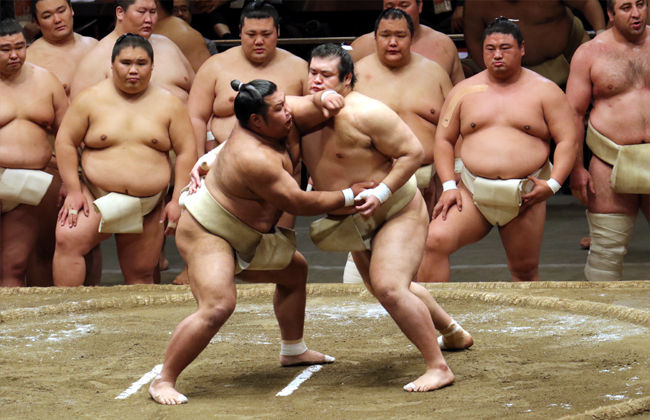
Keiko is the daily morning training that fills a sumo wrestler’s day before his first big meal. Held inside the stable’s practice ring on an empty stomach, it stacks repetitive drills and brutal partnered bouts that build the body and technique, then feeds straight into the eat-and-rest routine that adds mass.
Training before food. Keiko fills the morning inside the heya’s practice ring, and wrestlers train fasted because the rule is hard work first, food and rest after.
Rank sets the order. The lowest-ranked wrestlers rise earliest and train the longest, while the salaried sekitori practice later once the floor is warmed up.
Solo drills first. Shiko, suriashi, and teppo hammer in the fundamentals of hips, footwork, and thrusting before any bout.
Then partnered bouts. Butsukari-geiko and moshiai-geiko test the body against another wrestler, by design grueling and built on volume.
Eat and rest after. The fasted session ends in hunger, the chanko-nabe hotpot comes straight after, and rest follows — the cycle that adds and holds mass.
What keiko is
Keiko (training) is the work that fills a sumo wrestler’s morning. It happens inside the heya, the stable where wrestlers live and train, in a dedicated practice ring called the keiko-ba. Wrestlers train on an empty stomach, before the day’s first big meal. The logic is plain: hard work first, food and rest after.
This is where sumo is actually made. Not in the arena under the lights, but on a clay floor in the early hours, repeating the same movements until they stop being movements and start being instinct. A sumo wrestler is built in this room.
Who trains, and in what order
Keiko runs on a strict pecking order tied to rank. The lowest-ranked wrestlers rise earliest and train the longest. The senior men, the salaried sekitori, practice later in the session, once the floor has been warmed up by their juniors.
That order isn’t just hierarchy for its own sake. The juniors prepare the ring and serve as live training partners for the wrestlers above them. Your place in the morning mirrors your place on the banzuke, the official ranking sheet that governs everything in sumo.
| Group | When they train | What it looks like |
|---|---|---|
| Junior wrestlers | Earliest, longest sessions | Drills, ring prep, serving as partners for higher ranks |
| Sekitori (salaried) | Later in the session | Practice bouts once the floor is warmed up |
The core drills
Before any bout, wrestlers grind through solo movements that hammer in the fundamentals.
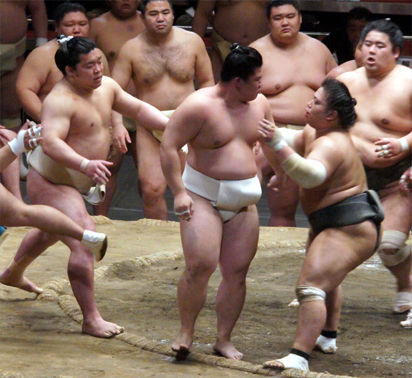
Shiko
Shiko is the high ceremonial leg-stomp, the same motion a wrestler performs on the dohyo (the ring) before a bout. In keiko it is repeated as conditioning, building the hips, balance, and lower-body strength that everything else in sumo rests on.
Suriashi
Suriashi is sliding-step footwork. The wrestler moves forward without lifting his feet from the floor, keeping his weight low and his base unbroken. It trains the gliding pressure that lets a wrestler drive an opponent backward without losing his own balance.
Teppo
Teppo means striking a wooden pillar, over and over, to drill thrusting and palm strikes. The pillar doesn’t move and doesn’t tire, so the wrestler can pound it until the thrust is automatic and the arms, shoulders, and timing are set.
The partnered forms
Solo drills build the engine. Partnered practice is where it gets tested against another body.
- Butsukari-geiko — a charging and pushing endurance drill. One wrestler braces while the other drives him across the ring, again and again, until the pusher has nothing left. It is as much about lungs and will as it is about technique.
- Moshiai-geiko — continuous winner-stays-on practice bouts. The wrestler who wins keeps the ring and faces the next challenger, so the strongest in the room get bout after bout while the floor waits its turn.
Keiko is grueling and repetitive by design. The point is volume: enough reps and enough live bouts that the body adapts and the technique holds under real pressure.
What happens after keiko
The training feeds directly into the rest of the day. Because wrestlers practice fasted, the session ends with hunger by design. The big midday meal of chanko-nabe, the hearty hotpot eaten by the potful, comes straight after.
Then comes rest. Train hard on an empty stomach, eat heavily, sleep. That cycle is how a wrestler puts on and holds the mass the sport demands. Keiko is the first and hardest link in it.
Frequently asked questions
What time does keiko start?
Keiko fills the morning, with the lowest-ranked wrestlers rising earliest and training the longest. The salaried sekitori join later in the session. Wrestlers train before the day’s first big meal, so the session runs on an empty stomach.
Why do sumo wrestlers train on an empty stomach?
Training fasted is part of the eat-and-rest cycle that builds mass. The hard work comes first, then the big midday meal of chanko-nabe, then rest. Eating heavily after a draining session and sleeping is how wrestlers put on and hold weight.
What are the main sumo training drills?
The core solo drills are shiko (the high ceremonial leg-stomp), suriashi (sliding-step footwork), and teppo (striking a wooden pillar to drill thrusting). Partnered forms include butsukari-geiko, a charging and pushing endurance drill, and moshiai-geiko, continuous winner-stays-on practice bouts.
Where does keiko take place?
Keiko happens inside the heya, the stable where wrestlers live and train. The practice ring itself is called the keiko-ba. Each stable runs its own morning training on its own floor.
What is butsukari-geiko?
Butsukari-geiko is a charging and pushing endurance drill. One wrestler drives the other across the ring repeatedly while the receiving wrestler braces against him. It pushes lungs and willpower as hard as technique, and is one of the most exhausting parts of keiko.
Who trains first in a sumo stable?
The junior, lower-ranked wrestlers train first. They rise earliest, prepare the ring, train the longest, and serve as partners for the wrestlers above them. The higher-ranked sekitori practice later in the session, once the floor is warmed up.