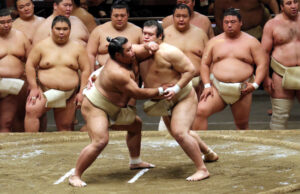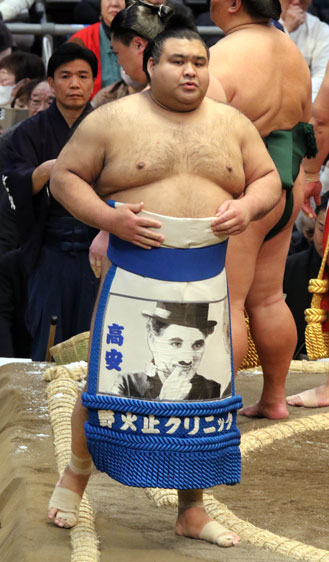
A sekitori is a sumo wrestler ranked in the top two divisions, Juryo and Makuuchi. Reaching Juryo is the threshold. Cross it and the Japan Sumo Association pays you a monthly salary, gives you attendants, a silk mawashi, and a spot in the televised tournament. Below Juryo, none of that exists.
Sekitori means the top two divisions. The term covers every wrestler in Juryo and Makuuchi; everyone in the four divisions below is a wrestler but not a sekitori.
The bottom of Juryo is the line. Promotion from Makushita into Juryo is the single biggest status change in a sumo career — a different life, not just a pay bump.
Sekitori are salaried; lower ranks are not. Sekitori draw a monthly salary from the Japan Sumo Association, while wrestlers below Juryo live on a modest per-tournament allowance and stable support.
The privileges are visible. Sekitori wear a silk mawashi and a kesho-mawashi in the ring-entering ceremony, have personal attendants, and appear in the televised part of the tournament.
Status is held, not owned. The banzuke is rewritten every tournament, so a Juryo wrestler with a losing record can be demoted below the line and lose the salary, silk, and attendants.
What “sekitori” actually means
Sekitori (関取) is the word for any sumo wrestler ranked in the top two divisions: Juryo (十両) and Makuuchi (幕内, the top division). Everyone below them — in Makushita, Sandanme, Jonidan, and Jonokuchi — is still a wrestler, but not a sekitori. The line runs right at the bottom of Juryo.
That single line is the most consequential one in the sport. Wrestlers spend years grinding through the lower divisions to cross it, and falling back below it can derail a career. To understand why, you first have to see where it sits in the structure. (For the full ranking sheet, see our guide to the banzuke.)
The six divisions, top to bottom
The banzuke — the official ranking sheet the Japan Sumo Association issues before every tournament — sorts every wrestler into six divisions:
- Makuuchi — the top division
- Juryo — the second division
- Makushita — third
- Sandanme — fourth
- Jonidan — fifth
- Jonokuchi — the entry division
Draw the line between Juryo (2) and Makushita (3). Everyone above it is a sekitori. Everyone below it is not. The gap between those two adjacent divisions is far wider than the one-step drop suggests, because crossing it changes how you are paid, dressed, attended, and televised.
Inside Makuuchi: the named ranks
Makuuchi is not flat. It splits into five ranks of its own, top to bottom:
- Yokozuna — grand champion (guide)
- Ozeki — champion (guide)
- Sekiwake and Komusubi — the two ranks that sit directly above the rank-and-file (guide)
- Maegashira — the rank-and-file of the top division (guide)
All of them are sekitori. So is every wrestler in Juryo. A bottom-ranked Juryo wrestler and a yokozuna sit at opposite ends of prestige, but they share the same fundamental status line — both are salaried sekitori.
Why the Juryo line changes everything
Promotion from Makushita to Juryo is the single biggest status change in a sumo career. It is not a pay bump. It is a different life. With sekitori status come privileges that lower-ranked wrestlers simply do not have:
| Sekitori (Juryo + Makuuchi) | Below Juryo (Makushita and down) | |
|---|---|---|
| Pay | Monthly salary from the Japan Sumo Association | No salary — only a modest tournament allowance |
| Mawashi (belt) | Right to wear a white silk mawashi | No silk mawashi |
| Ceremony | Wears a kesho-mawashi (decorative apron) in the ring-entering ceremony | Does not take part |
| Attendants | Has personal attendants (tsukebito) | Serves as an attendant to others |
| TV | Appears in the televised part of the tournament | Bouts fought earlier, off the main broadcast |
The pay difference is the headline. Sekitori draw a monthly salary; everyone below Juryo does not. The exact amounts, rank by rank, are in our guide to what sumo wrestlers earn. A lower-division wrestler lives on a small per-tournament allowance and the support of his stable. Cross into Juryo and, for the first time, sumo becomes a salaried profession. (We don’t publish specific yen figures here — amounts are set by the Association, and the safest statement is simply that sekitori are paid and lower ranks are not.)
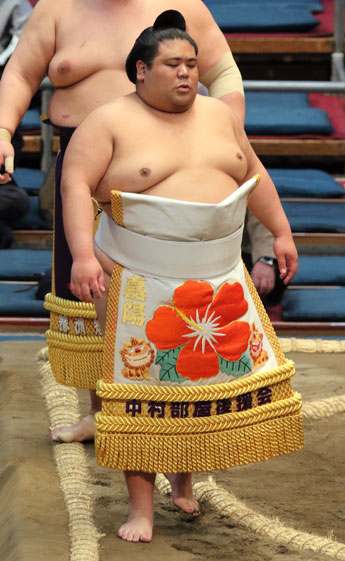
The visible markers matter too. The silk mawashi and the embroidered kesho-mawashi worn in the dohyo-iri (ring-entering ceremony) are not just decoration — they announce, on sight, that this man has crossed the line. The tsukebito relationship flips completely: a man who spent years carrying a senior’s bags, cooking, and cleaning suddenly has juniors doing the same for him.
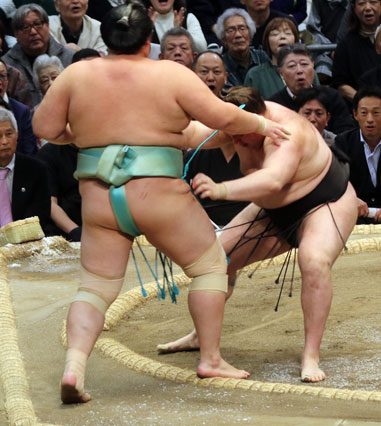
Sekitori is a status, not a fixed seat
Ranks move every tournament. The Association rewrites the banzuke based on each wrestler’s win-loss record, so sekitori status is held, not owned. A strong Makushita wrestler can earn promotion into Juryo and become a sekitori; a Juryo wrestler with a losing record can be demoted back below the line and lose the salary, the attendants, and the silk along with it.
That churn is what gives the Juryo line its tension. Newcomers chase it for years. Veterans clinging to the bottom of Juryo fight every day to stay above it. The same sheet that promotes one man pushes another back into the unsalaried ranks.
If you’re still building the basics, start with what a sumo wrestler is, then come back to see how the sekitori line cuts across the whole structure.
The short version
Sekitori = the top two divisions, Juryo and Makuuchi. The bottom of Juryo is the line. Above it: salary, silk, attendants, ceremony, television. Below it: an allowance and the work of getting there. Everything about a wrestler’s daily life changes the day he crosses into Juryo — which is why, in sumo, “becoming a sekitori” is the moment that counts.
Sekitori is one of a few dozen terms that carry real mechanics inside them. The rest are collected in the sumo glossary.
Frequently asked questions
What does sekitori mean in sumo?
Sekitori is the term for a wrestler ranked in sumo’s top two divisions, Juryo and Makuuchi. Reaching Juryo is the threshold that makes a wrestler a sekitori. Everyone in the four lower divisions is a wrestler but not a sekitori.
What is the difference between a sekitori and a lower-ranked wrestler?
Sekitori receive a monthly salary from the Japan Sumo Association; wrestlers below Juryo do not, getting only a modest tournament allowance. Sekitori also wear a silk mawashi, take part in the ring-entering ceremony, have personal attendants, and appear on the televised broadcast.
Which sumo divisions count as sekitori?
Only the top two divisions: Juryo and Makuuchi. Makuuchi itself contains five ranks — yokozuna, ozeki, sekiwake, komusubi, and maegashira — and all of them, plus every Juryo wrestler, are sekitori.
Do sekitori get paid a salary?
Yes. Sekitori are salaried by the Japan Sumo Association, which is the main reason reaching Juryo is the biggest status change in a sumo career. Wrestlers below Juryo are not salaried and live on a per-tournament allowance plus stable support.
Can a wrestler lose sekitori status?
Yes. The banzuke is rewritten every tournament based on results, so a Juryo wrestler with a losing record can be demoted below the line and lose the salary, silk mawashi, and attendants that come with being a sekitori.
Why is being promoted to Juryo such a big deal?
Because it crosses the single most important line in sumo. Promotion from Makushita to Juryo turns the sport into a salaried profession overnight and brings the silk mawashi, ceremony role, personal attendants, and television exposure that lower ranks never have.