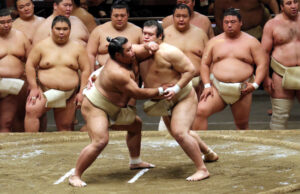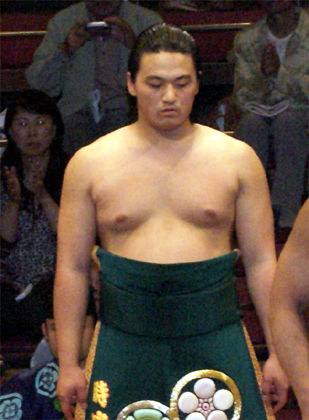
To become a sumo wrestler, a new recruit (shin-deshi) joins a stable and passes the Japan Sumo Association’s entrance exam. He then fights unranked maezumo (“pre-sumo”) bouts at a tournament. Clearing maezumo earns him a spot at the very bottom of the banzuke, in the jonokuchi division.
Nobody starts on the banzuke. A career runs through maezumo from the very bottom, with no shortcuts up the single ladder.
Two steps come before any rank. A recruit must join a stable (heya) and pass the Japan Sumo Association’s entrance examination.
Maezumo is the qualifying round. These unranked “pre-sumo” bouts don’t appear on the banzuke; clearing them qualifies a recruit to be listed.
The reward is jonokuchi. From the next tournament, the recruit’s name appears at the very bottom of the ranking sheet, in the lowest division.
Recruitment is shrinking. Intake has been declining in recent years, a fall tied to Japan’s declining birthrate — so every shin-deshi who steps onto the clay matters more.
The first rung: from recruit to ranked wrestler
Nobody is born onto the banzuke, the ranking sheet that lists every professional wrestler. A career that runs through maezumo starts at the very bottom, and the climb from there is one ladder with no shortcuts.
A new recruit is called a shin-deshi (新弟子, “new disciple”). Before he can be ranked, he has to do two things: join a stable, and clear the formalities and first bouts that turn an applicant into a listed wrestler. Those first bouts are maezumo (前相撲), literally “pre-sumo” — and they are where the whole story begins.
Step 1: join a stable (heya)
You cannot apply to sumo as a free agent. A recruit must first be taken in by a stable (heya), the training house where wrestlers live, train, eat, and sleep under one stablemaster. The stable is the unit that puts a recruit forward to the Japan Sumo Association (JSA).
Once accepted, the recruit moves in. Stable life is the foundation of everything that follows — daily morning practice, communal meals, and the chores that the most junior wrestlers handle for the senior ranks.
Step 2: pass the JSA entrance examination
Every prospective wrestler has to clear the JSA’s entrance examination — a physical check and basic screening. This is the gate between “someone who wants to wrestle” and “someone the Association will let compete.”
The exact thresholds the Association uses have changed over the years, so the honest answer to “how big do you have to be?” is: big enough to pass the entrance physical on the day you apply. We won’t quote a fixed minimum here, because those numbers have shifted across eras and stating an outdated figure would mislead you.
Step 3: fight in maezumo
A recruit who has joined a stable and passed the exam doesn’t appear on the banzuke straight away. He first fights maezumo — unranked bouts held at a tournament that do not yet show up on the ranking sheet.
Think of maezumo as the qualifying round. These bouts don’t carry a rank and aren’t printed on the banzuke. Their job is to confirm a recruit can actually compete. Coming through maezumo is what qualifies him to be listed from the next tournament onward.
What maezumo earns you: a place in jonokuchi
Clearing maezumo doesn’t make a recruit a star. It earns him the very last line of the banzuke, in the lowest division, jonokuchi (序ノ口). From the following tournament, his name finally appears in print — at the bottom, but on the sheet.
From jonokuchi, the rules are brutally simple. Every wrestler climbs the same single ladder by his win-loss record. Win more than you lose and you rise; lose more than you win and you fall. The record on the clay decides everything, tournament after tournament.
| Stage | What it is | On the banzuke? |
|---|---|---|
| Shin-deshi | New recruit who has joined a stable | No |
| JSA entrance exam | Physical check and basic screening | No |
| Maezumo | Unranked “pre-sumo” bouts at a tournament | No |
| Jonokuchi | Lowest listed division | Yes — bottom line |
That bottom line is a long way from becoming a salaried sekitori, the paid upper ranks every recruit is aiming for. Between jonokuchi and a salary lie several divisions, each cleared the same way: by winning more bouts than you lose, tournament after tournament.
Why fewer young men are starting the climb
The maezumo line at each tournament is also a window onto sumo’s biggest off-the-clay problem: recruitment.
Recruit numbers have been declining in recent years. Michihiro Taguchi, who attends and photographs nearly every tournament, tracks the intake-versus-retirement figures each basho (場所, “tournament”) and ties the fall to Japan’s declining birthrate. Fewer boys are being born, and fewer of them are walking into stables — so the pool that maezumo draws from keeps shrinking.
That makes every shin-deshi who does step onto the clay more significant, not less. The recruit fighting an unranked bout today is the future of a sport doing the math on its own supply.
How to think about a wrestler’s origin story
When you watch a sumo wrestler you’ve never heard of, remember that many of them once stood in a maezumo bout that nobody printed and nobody ranked. The path from there is open to anyone who joins a stable, passes the exam, and keeps winning — which is exactly what makes the bottom of the banzuke worth watching.
Frequently asked questions
What is the difference between maezumo and shin-deshi?
Shin-deshi (“new disciple”) is the person — a new recruit who has joined a stable. Maezumo (“pre-sumo”) is the event — the unranked qualifying bouts that recruit fights at a tournament. A shin-deshi competes in maezumo, and clearing it qualifies him for the banzuke.
Does maezumo count on the banzuke?
No. Maezumo bouts are unranked and do not appear on the banzuke. Their purpose is to qualify a recruit to be listed. From the next tournament after clearing maezumo, his name appears at the very bottom of the ranking sheet, in the jonokuchi division.
How do you become a sumo wrestler?
You join a stable (heya), pass the Japan Sumo Association’s entrance examination — a physical check and basic screening — and then fight unranked maezumo bouts at a tournament. Coming through maezumo earns you a place at the bottom of the banzuke, in jonokuchi, from the following tournament.
Is there a minimum size to become a sumo wrestler?
Recruits must pass the JSA’s entrance physical. The exact height and weight thresholds the Association uses have changed over the years, so there is no single permanent number. What matters is passing the entrance check at the time you apply.
What happens after a recruit clears maezumo?
He enters the lowest division, jonokuchi, on the next banzuke. From there he climbs the same single ladder as everyone else, rising or falling by his win-loss record in each tournament, with the salaried sekitori ranks as the long-term goal.
Why are fewer people becoming sumo wrestlers?
Recruit numbers have been declining in recent years. Reporter Michihiro Taguchi tracks the intake-versus-retirement figures each tournament and links the fall to Japan’s declining birthrate — fewer young men are being born, so fewer are entering stables and stepping into maezumo.