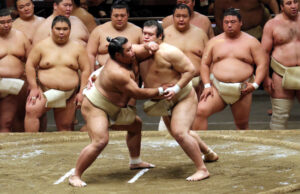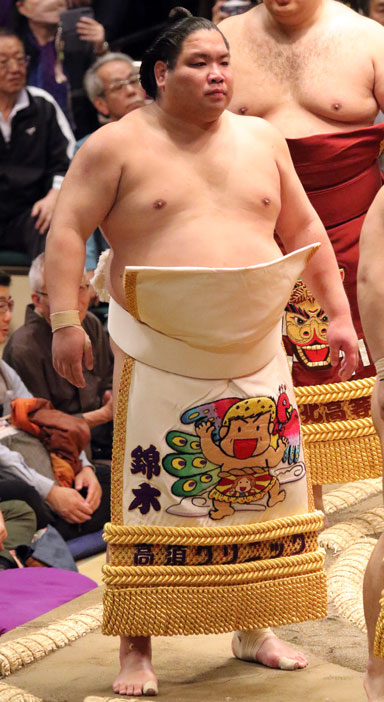
A shikona (ring name) is the fighting name a sumo wrestler competes under and appears on the banzuke instead of his birth name. The stablemaster usually chooses it, often drawing on the wrestler’s real name, stable tradition, a master’s name, or words evoking nature, places, or strength.
A shikona is a ring name. It is the fighting name a wrestler competes under, replacing his birth name on the banzuke and in announcements.
The stablemaster usually chooses it. Family or a stable patron may offer input, but the master who runs the heya holds the final say.
Names come from a few sources. A variation on the real name, stable tradition or a master’s name, or words evoking nature, places, or strength.
Some shikona pass down across generations. Stables keep traditional names alive, linking a current wrestler to those who carried the name before him.
Wrestlers can change their shikona. A change often follows promotion to a new rank or marks a fresh start after a slump or a stable change.
What a shikona is
A shikona (ring name; the name a wrestler fights under) replaces a sumo wrestler‘s birth name once he competes. It is the name announcers call before a bout, the name fans chant, and the name printed on the banzuke, the official ranking sheet issued before each tournament. When you follow sumo, you almost never learn a wrestler’s given name. You learn his shikona.
The ring name does more than label a person. It signals where a wrestler trained, which lineage he belongs to, and sometimes the hopes a master has pinned on him.
Who chooses a shikona
A shikona is usually chosen by the stablemaster, the retired wrestler who runs the heya (sumo stable) where the young recruit lives and trains. The choice can involve input from the wrestler’s family or a patron who supports the stable, but the stablemaster holds the pen.
That control is why ring names feel connected to a stable rather than to an individual. A master naming a new recruit is placing him inside a tradition, not just handing him a label.
Where shikona come from
Ring names are built in a few recognizable ways. A wrestler rarely arrives with a name pulled from nowhere; most trace back to one of these sources.
| Source | How it works |
|---|---|
| The wrestler’s real name | A variation on his birth name, lightly reshaped into a fighting name |
| Stable tradition or a master’s name | A name tied to the heya’s lineage, sometimes inherited from the stablemaster |
| Nature, places, or strength | Words evoking mountains, rivers, regions, or power |
These categories blur in practice. A single shikona can nod to a wrestler’s hometown while echoing a name his stable has carried for generations.
Names passed down across generations
Stables often keep traditional shikona alive and hand them down from one wrestler to the next. The Ise-no-umi stable, for example, favors traditional names, keeping its lineage legible through the ring names its wrestlers carry. Some names resurface after long gaps: the wrestler formerly known as Wakaikari revived the name Fujinokawa, switching his shikona to it. And a name like Nishikigi reaches deep into the sport’s past, appearing among top-division wrestlers as far back as the Edo period.
When a familiar shikona returns to the banzuke, longtime fans read it as a thread connecting the present wrestler to the men who held the name before him.
Why a wrestler changes his shikona
A wrestler can change his shikona during his career. The two common triggers are promotion, where a new rank invites a new name, and a fresh start after a slump or a stable change.
Because the name carries lineage and expectation, a change is rarely cosmetic. Taking up an inherited name can mark a wrestler as the next holder of a tradition, while a self-chosen change can signal a clean break. For newcomers, our guide to sumo rules explains how rank and ranking fit into the wider structure of the sport.
Reading a shikona
You do not need to translate every ring name to follow sumo, but knowing the logic helps. When you see a name on the banzuke, you are often looking at several things at once: a hint of the wrestler’s origins, a marker of his stable, and sometimes a link to wrestlers who carried that name before him.
Frequently asked questions
What is a shikona?
A shikona is a sumo wrestler’s ring name, the fighting name he competes under. It appears on the banzuke ranking sheet and in announcements instead of his birth name. Fans almost always know a wrestler by his shikona rather than his given name.
Who chooses a sumo wrestler’s ring name?
The stablemaster usually chooses it. He runs the heya, or stable, where the recruit trains and lives. Sometimes the wrestler’s family or a stable patron offers input, but the stablemaster makes the final decision.
How is a shikona created?
Ring names are commonly built from a variation on the wrestler’s real name, from the stable’s traditions or a master’s name, or from words evoking nature, places, or strength. These sources often combine in a single name.
Can a sumo wrestler change his shikona?
Yes. A wrestler can change his ring name during his career. It often happens on promotion to a new rank, or as a fresh start after a difficult run or a change of stable.
Why do some shikona repeat across different wrestlers?
Stables keep traditional ring names and pass them down across generations. The Ise-no-umi stable favors traditional names, and a name like Nishikigi has appeared among top-division wrestlers as far back as the Edo period. A revived name links a current wrestler to those who held it before.
What does shikona mean for fans watching sumo?
The shikona is how you identify and follow a wrestler. Beyond a label, it can signal his stable lineage, his origins, and the expectations attached to him, making the banzuke a compact record of each wrestler’s background.