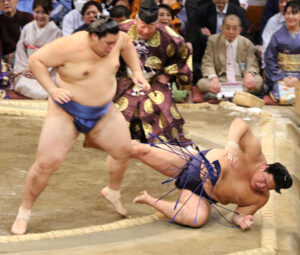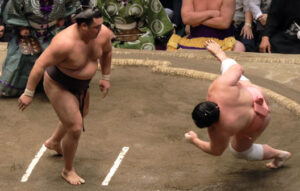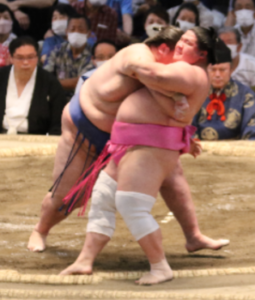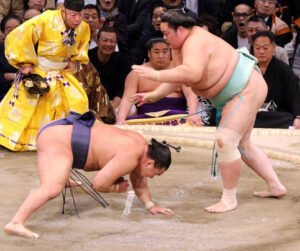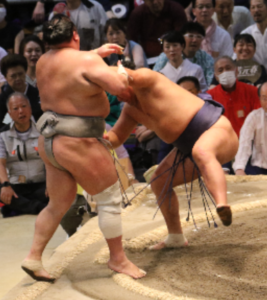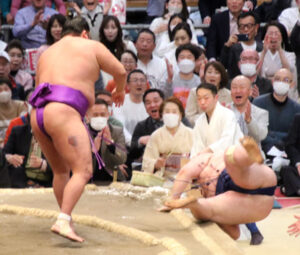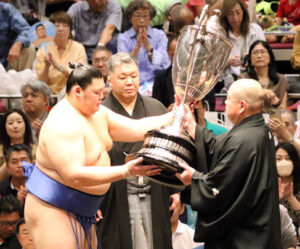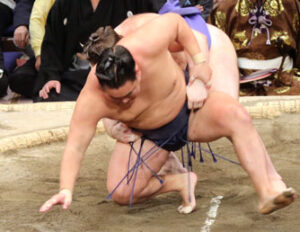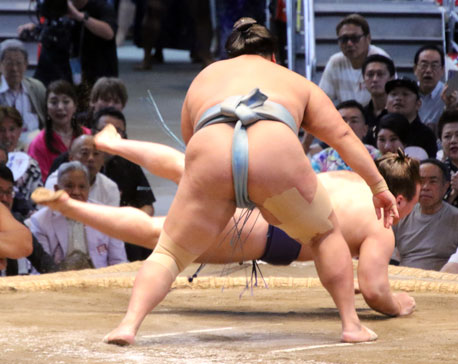
The Nagoya basho is the July edition of professional sumo’s six annual grand tournaments (honbasho), held in Nagoya and run across fifteen straight days, Sunday to Sunday — in 2026, from July 12 to July 26. Since 2025 it has taken place at the new IG Arena, near Meijo-koen, after decades at the city’s older gymnasium. This page records the July 2026 tournament and its venue. For a future visit, consult the current official ticket notice; broadcast availability, coverage and charges depend on the provider and your region.
One of six, held every July: Nagoya is the summer leg of the six-tournament honbasho calendar, and the newest of the six — it became an official grand tournament in 1958.
A new home since 2025: the tournament now runs at Nagoya’s IG Arena, reached via the Meijo-koen area, replacing the older venue used for decades.
Fifteen days, one bout a day: every top-division wrestler fights once daily; the headline bouts close each afternoon, and eight wins (kachikoshi) is the line between climbing and sliding on the rankings.
Tickets are a “platinum” item: buy from the official “Ticket Ohzumo” channels, as general sales often sell out fast. Broadcast coverage depends on the provider and region.
What the Nagoya basho is
The Nagoya basho is the July round of sumo’s six grand tournaments, the honbasho — the only tournaments that count toward a wrestler’s ranking. The calendar is fixed: three tournaments in Tokyo (January, May, September) and one each in Osaka (March), Nagoya (July) and Fukuoka (November). Nagoya is the youngest of the six. It became an official honbasho in 1958, the year the modern six-tournaments-a-year system was completed, and it is co-organized by the Japan Sumo Association and the Chunichi Shimbun.
The July timing gives this tournament its own character. It lands in the thick of the Japanese summer, and the heat has become part of the basho’s lore — a physical test layered on top of the competition itself. Like every honbasho, it runs fifteen consecutive days, opening and closing on a Sunday, with each top-division wrestler fighting a single bout per day.
Nagoya basho 2026 schedule — key dates
The tournament runs for fifteen straight days, opening and closing on a Sunday. These are the dates to mark for 2026.
| Day | Date (2026) |
|---|---|
| Day 1 — opening day (shonichi) | July 12, 2026 (Sun) |
| Day 8 — midpoint (nakabi) | July 19, 2026 (Sun) |
| Day 15 — final day (senshuraku) | July 26, 2026 (Sun) |
Where the Nagoya basho is held — the new IG Arena
The Nagoya tournament changed address in 2025. After decades at the city’s older gymnasium, the basho moved to the new IG Arena, a large modern venue in the Meijo-koen area of Nagoya. The arena holds well over fifteen thousand people, though sumo does not fill the whole building: the tournament is seated on the lower levels, with the upper tiers left unused, which keeps the crowd close to the ring.
For visitors, the practical detail is the approach. The nearest station is Meijo-koen, and the arena connects to it by an underground passage — a welcome thing to know in the July heat, since it keeps much of the walk out of the sun.
How to watch the Nagoya basho
In person, at the arena
A day at the basho is built like a slow crescendo. The doors open in the morning and the lowest divisions go first, often to a near-empty hall; as the afternoon wears on the standard rises, the seats fill, and the top makuuchi division closes the day. If you’re coming to see the biggest names — the yokozuna and ozeki — aim for the late afternoon, when the ring-entering ceremonies and the headline bouts take over.
The whole venue is reserved seating, in three broad grades: ringside floor seats (tamari-seki), the closest and strictest; box seats (masu-seki), sold in units of four, where you sit on cushions; and Western-style chair seats (isu-seki), the most comfortable and the most affordable. For the full breakdown of seat types and how a tournament day unfolds, see our guide to how to watch sumo.
From home, on television
You don’t have to be in Nagoya to follow the tournament. Check your broadcaster or streaming provider for the tournament, coverage period, charges and regional availability. Highlights and full live coverage are different services.
Who to watch in 2026
The banzuke (ranking) for the Nagoya tournament was published on June 29, 2026. Sumo’s top ranks are unusually deep right now, which is part of why the sport is drawing new fans. Here is how the titled ranks (sanyaku) line up for July.
| Rank | East | West |
|---|---|---|
| Yokozuna | Hoshoryu | Onosato |
| Ozeki | Kirishima | Kotozakura |
| Sekiwake | Atamifuji / Wakatakakage | Kotoshoho / Aonishiki |
| Komusubi | Yoshinofuji | Oho |
A few names to follow into the tournament:
- Hoshoryu — the East yokozuna and the nephew of the former yokozuna Asashoryu, with a sharp, belt-based attack.
- Onosato — the West yokozuna, who reached sumo’s highest rank in a record-fast 13 tournaments from his debut, and only the second college-trained wrestler ever to make yokozuna. A pushing-thrusting force at the top of the sport.
- Kirishima — the East ozeki, making a second run at promotion to yokozuna in Nagoya.
- Aonishiki — the Ukrainian-born wrestler who first reached ozeki at 21; he dropped back to sekiwake for this tournament and fights to win the rank back.
- Wakatakakage — a sekiwake again after a strong run at komusubi, a quick and technical wrestler.
- Oho — now at komusubi, the grandson of the legendary yokozuna Taiho, a thrusting-and-pushing wrestler expected to lead his stable one day.
- Yoshinofuji — promoted to komusubi for the first time, reaching the titled ranks just a year after his top-division debut.
For context on the tournament’s recent history, the 2025 Nagoya tournament — the first held at IG Arena — was won by Kotoshoho on the final day.
Nagoya 2026: day-by-day results
We add the headline results here as the tournament unfolds, day by day — the yokozuna and ozeki bouts, plus the single biggest talking point of each day. Last updated July 17, 2026 (Day 6).
Day 1 — July 12, 2026
| Wrestler | Rank | Day 1 result |
|---|---|---|
| Onosato | Yokozuna | Loss — pushed out (oshidashi) by komusubi Yoshinofuji |
| Hoshoryu | Yokozuna | Win — beat komusubi Oho by watashikomi (a leg-grabbing push-down) |
| Kirishima | Ozeki | Win — overpowered Fujinokawa |
| Aonishiki | Sekiwake | Win — threw Hiradoumi with an overarm throw (uwatenage) |
- No kinboshi. The only yokozuna to lose fell to a komusubi, not a rank-and-file (maegashira) wrestler, so no gold-star upset was recorded.
- Withdrawal: sekiwake Wakatakakage is out for the whole tournament (Japan Sumo Association withdrawal notice).
- Bout of the day: back from two tournaments out, yokozuna Onosato fell to newly promoted komusubi Yoshinofuji — the only loss among the top ranks on opening day.
Full tournament report (Japanese): Nagoya Day 1 — the returning trio’s contrasting fortunes, by Michihiro Taguchi.
Day 2 — July 13, 2026
| Wrestler | Rank | Day 2 result |
|---|---|---|
| Onosato | Yokozuna | Loss — thrust down (tsukiotoshi) by maegashira 1 Fujinokawa (0–2) |
| Hoshoryu | Yokozuna | Win — beat Takanosho by scoop throw (sukuinage) (2–0) |
| Kirishima | Ozeki | Win — beat Oho by scoop throw (sukuinage); two straight in his yokozuna bid |
| Aonishiki | Sekiwake | Win — pushed out Minonoumi by yorikiri; two straight in his ozeki-return bid |
- Kinboshi: one — maegashira 1 Fujinokawa took the gold-star upset from yokozuna Onosato.
- Withdrawal: sekiwake Wakatakakage remains out (all fifteen days).
- Bout of the day: Onosato, back from two tournaments off, dropped a second straight to a new-face M1. Michihiro Taguchi wrote that “the ordeal of Onosato will come whether he sits out or fights on.”
Full tournament report (Japanese): Nagoya Day 2 — a cruel decision looms for the injured Onosato, by Michihiro Taguchi.
Day 3 — July 14, 2026
| Wrestler | Rank | Day 3 result |
|---|---|---|
| Onosato | Yokozuna | Win — pushed out Takanosho by oshidashi for his first white star (1–2) |
| Hoshoryu | Yokozuna | Loss — thrust down (tsukiotoshi) by maegashira 1 Fujinokawa (2–1) |
| Kirishima | Ozeki | Win — pushed out Gonoyama by oshidashi; three straight in his yokozuna bid |
| Aonishiki | Sekiwake | Win — pushed out Hakunofuji by yorikiri; three straight in his ozeki-return bid |
- Kinboshi: one — Fujinokawa struck down a yokozuna for the second day in a row, this time Hoshoryu.
- Withdrawal: Wakatakakage remains out.
- Bout of the day: Taguchi called the Hoshoryu–Fujinokawa clash the highlight of the day — “he slipped the charge on one right leg and won; Fujinokawa’s sumo really is fascinating.” A maegashira 1 taking two yokozuna on back-to-back days.
Full tournament report (Japanese): Nagoya Day 3 — Fujinokawa’s sumo really is fascinating, by Michihiro Taguchi.
Day 4 — July 15, 2026
| Wrestler | Rank | Day 4 result |
|---|---|---|
| Onosato | Yokozuna | Loss — his leaping slap-down was overturned by the judges (mono-ii): his foot had landed outside the ring first, giving Gonoyama the win (1–3) |
| Hoshoryu | Yokozuna | Win — thrust down (tsukiotoshi) Minonoumi (3–1) |
| Kirishima | Ozeki | Win — pushed out Takanosho by oshidashi; four straight in his yokozuna bid |
| Aonishiki | Sekiwake | Loss — thrown at the edge by komusubi Yoshinofuji with an overarm throw (uwatenage); his first defeat (3–1) |
- Kinboshi: one — Gonoyama took down Onosato, the third gold star of the basho.
- Withdrawal: Wakatakakage remains out.
- Bout of the day: the final bout ended in a long judges’ conference before Onosato’s leap was ruled out of bounds. Taguchi: “Onosato is in dire straits once again. His anguish continues.”
Full tournament report (Japanese): Nagoya Day 4 — Onosato falls to three losses, by Michihiro Taguchi.
Day 5 — July 16, 2026
| Wrestler | Rank | Day 5 result |
|---|---|---|
| Onosato | Yokozuna | Win — overpowered Minonoumi, driving straight forward (2–3) |
| Hoshoryu | Yokozuna | Win — turned the bout around with a split-second arm-bar throw (tottari) against Gonoyama (4–1) |
| Kirishima | Ozeki | Loss — blitzed by Hiradoumi’s fast attack; his first defeat (4–1) |
| Aonishiki | Sekiwake | Win — forced out kadoban ozeki Kotozakura by yorikiri (4–1) |
- Kinboshi: none — both yokozuna won.
- Withdrawal: Wakatakakage remains out.
- Bout of the day: unbeaten Kirishima could do nothing against Hiradoumi’s lightning start — “a truly unexpected ending” (Taguchi). No wrestler in the top ranks remains perfect.
Full tournament report (Japanese): Nagoya Day 5 — the day the last perfect record above sekiwake vanished, by Michihiro Taguchi.
Day 6 — July 17, 2026
| Wrestler | Rank | Day 6 result |
|---|---|---|
| Onosato | Yokozuna | Win — drove out Hiradoumi by yorikiri; Taguchi called it “his best sumo of the tournament” (3–3) |
| Hoshoryu | Yokozuna | Loss — toppled by maegashira Hakunofuji’s twisting counter (kirikaeshi); the gunbai was overturned on review (4–2) |
| Kirishima | Ozeki | Win — pushed out Yoshinofuji by oshidashi (5–1) |
| Aonishiki | Sekiwake | Win — beat Oho with an underarm twist-down (shitatehineri) (5–1) |
- Kinboshi: one — Hakunofuji earned his fifth career gold star, the fourth of this basho.
- Withdrawal: Wakatakakage remains out.
- Bout of the day: only Kirishima and Aonishiki are still on one loss among the top ranks — the yusho race is tightening at the top.
Full tournament report (Japanese): Nagoya Day 6 — only two men above sekiwake still on one loss, by Michihiro Taguchi.
Tickets — overview and where to buy
Sumo tickets have become a genuine “platinum” item. As the sport’s popularity has surged, general sales often sell out within roughly forty minutes to an hour of opening, and even the official advance lottery and fan-club presales can come up empty.
Buy only through legitimate channels: the official “Ticket Ohzumo” site run by the Japan Sumo Association, plus convenience stores and play guides, telephone booking, and the Kokugikan Service Company. Sales run in two stages — an advance lottery (senko chusen) first, then the general sale — so the practical strategy is to enter the advance lottery rather than wait for the general on-sale. If you can’t get a ticket, official resale is the realistic fallback, and broadcast availability must be checked with the provider in your region.
We deliberately do not quote ticket prices or on-sale dates here, because they change by tournament and by year. Confirm the current prices and schedule on the official “Ticket Ohzumo” site before you commit to travel dates. Our dedicated guide to buying sumo tickets walks through each channel in more detail, and our sumo etiquette guide covers what to know once you’re inside.
Frequently Asked Questions
When is the Nagoya basho held?
The Nagoya tournament is the July leg of sumo’s six grand tournaments, running fifteen consecutive days from a Sunday to a Sunday. In 2026 it runs July 12 to July 26.
Where is the Nagoya basho held?
Since 2025 it has been held at the new IG Arena in Nagoya, near Meijo-koen, after decades at the city’s older gymnasium.
How can I watch the Nagoya basho?
In person on tickets from the official “Ticket Ohzumo” channels, or from home on Japanese television, which broadcasts the bouts daily. Check regional access, coverage and charges with the broadcaster.
How do I get tickets, and how much do they cost?
Buy from the official “Ticket Ohzumo” site and authorized outlets; enter the advance lottery early, as general sales sell out fast. Prices change every year, so check the official source for the current figures — this guide does not quote prices.
Who should I watch at the Nagoya tournament?
The banzuke for Nagoya 2026 was published on June 29. The top ranks are deep — yokozuna Hoshoryu and Onosato, ozeki Kirishima (on a second yokozuna run) and Kotozakura, and a four-strong sekiwake line including Wakatakakage and Aonishiki are all worth following.