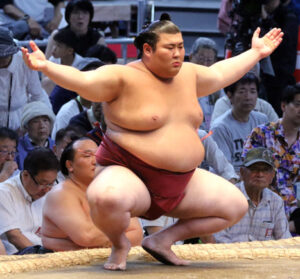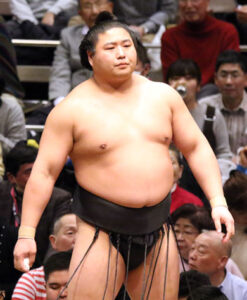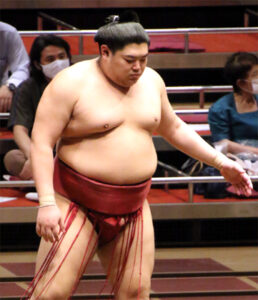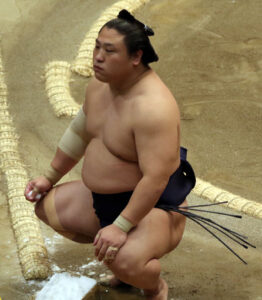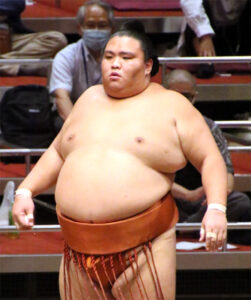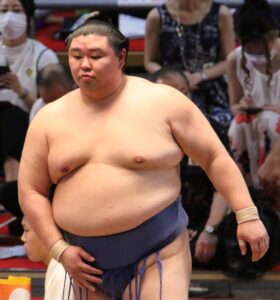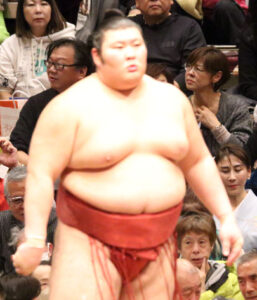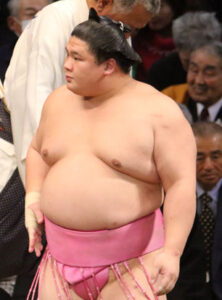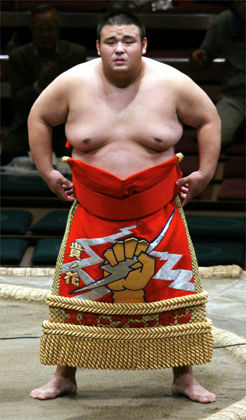
Photo by Michihiro Taguchi.
In sumo, Takakeisho was a powerful thrust-and-push specialist who, at just 22, became one of the youngest ozeki in recent memory. This page captures the moment his promotion to sumo’s second-highest rank was made official, with yokozuna in his sights. That summit never came: he retired in September 2024, and now serves in the Sumo Association as the elder Minatogawa.
Promotion to ozeki
On the 27th, Takakeisho’s promotion to ozeki was formally confirmed. The notification ceremony, where messengers from the Sumo Association deliver the news, was held not at his stable but at a hotel. Receiving the envoys, Takakeisho gave his acceptance speech: that he would honor the name of ozeki, value the spirit of bushido, never forget gratitude and consideration for others, and devote himself to the way of sumo.
The youngest ozeki at 22
At 22, Takakeisho is the youngest man in the current makuuchi division, and his rise marks the arrival of a young ozeki after a long wait. Among the current yokozuna and ozeki, everyone except Takayasu is already past 30 — and even Takayasu is 29. That gap underlines what sets Takakeisho apart: youth, room to grow, and a ceiling that has yet to be reached.
Much of that grounding traces back to his father. The two worked at sumo side by side, almost as a two-man team, and perhaps because of it Takakeisho carries himself with a steady, clear-headed outlook. He is not the kind to lose sight of himself in a moment of success.
A thrust-and-push style
Takakeisho’s sumo is built on tsuki-oshi — thrusting and pushing — and the force behind it is considerable. He rattles opponents with a barrage of thrusts, then finishes with a slap-down or a thrust-over as the chance opens up. At the March tournament of 2019, he was seen driving back the yokozuna Kakuryu on day ten, a glimpse of what that pressure can do at the top of the banzuke.
His stated goal is the rank of yokozuna, and that ambition is well placed. Some argue he should add belt wrestling, or yotsu-zumo, to his arsenal. Yet given his height and the length of his arms, fighting on the belt does not suit him. A pushing style can stop winning the moment its rhythm falls out of gear, which is exactly where its difficulty lies. The counter to him is to step in hard at the tachiai and grab the front of his belt quickly; his answer is to sharpen his initial charge and the destructive power of the follow-up thrust. Widening his pushing game with hazu-oshi — driving up under the armpit — is one way forward.
Here the example of the old yokozuna Tochigiyama is instructive. Standing 172 cm and 103 kg, powerfully built, Tochigiyama wielded a devastating hazu-oshi, refused to give his opponents the belt, and wrestled a relentlessly logical brand of sumo. He even slept curled up like a shrimp so as not to lose the spring in his hips — everything in his life fed straight back into sumo. There may be a hint in that for Takakeisho’s own path to the top.
The road ahead
Becoming an ozeki changes a wrestler’s surroundings. The demands and distractions multiply, and the test is to resist them and stay locked onto sumo and nothing else. The March tournament left work to be done — Takakeisho dropped five bouts there, a reminder that plenty of challenges remain. Whether his finest day in sumo draws nearer or slips away will come down to one thing: the way he approaches the sport. With that, he turns toward the May tournament.
Frequently asked questions
Q. How old was Takakeisho when he made ozeki?
He was 22, the youngest wrestler in the makuuchi division at the time — a young ozeki after a long wait, with most other yokozuna and ozeki already past 30.
Q. What is Takakeisho’s fighting style?
Tsuki-oshi, a thrust-and-push style with real power. He shakes opponents with thrusts, then finishes with slap-downs or thrust-overs rather than wrestling on the belt.
Q. What is Takakeisho’s goal?
To reach yokozuna, sumo’s highest rank. Reaching it is likely to hinge on sharpening his tachiai charge and the power of his follow-up thrusts.