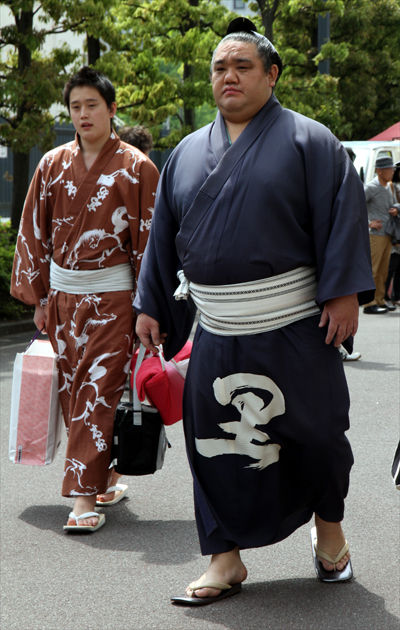
A tsukebito (tsuke-bito, “attached person”) is a lower-ranked sumo wrestler assigned to attend to a sekitori, a salaried wrestler in the top two divisions. The tsukebito carries his bags, runs errands, and helps him dress and bathe. The only way out is to become a sekitori yourself.
A tsukebito serves a sekitori. He is a lower-ranked wrestler assigned to handle the day-to-day work that lets a salaried wrestler focus on competing.
Only sekitori are entitled to attendants. The sekitori sit in juryo and makuuchi, the top two divisions; tsukebito come from makushita and below and are unsalaried.
The duties are practical and constant. Carrying gear including the akeni travel trunk, running errands, helping the sekitori bathe and dress, and shadowing him at the venue and in daily life.
It reflects sumo’s seniority structure. The system runs straight down the banzuke, and attending a sekitori doubles as a close-range apprenticeship for the junior wrestler.
There is one way out: get stronger. A wrestler stops being a tsukebito only by becoming a sekitori himself, at which point he becomes entitled to attendants of his own.
What is a tsukebito?
A tsukebito (tsuke-bito, literally “attached person”) is a lower-ranked sumo wrestler assigned to serve a sekitori — a salaried wrestler in the sport’s top two divisions, juryo and makuuchi. The tsukebito handles the day-to-day work that lets the sekitori focus on competing: hauling his gear, running errands, and shadowing him at the venue and in ordinary life.
Few professional sports build a formal attendant system into their hierarchy, with the people serving the stars being competitors climbing the same ladder. That makes the tsukebito one of sumo‘s more distinctive features.
Only a sekitori is entitled to tsukebito. The attendants come from the lower divisions — makushita and below — and are unsalaried. So the relationship is not boss-and-hired-help. It is senior wrestler and junior wrestler, both living and training inside the same heya (sumo stable).
What does a tsukebito actually do?
The duties are practical and constant. A tsukebito typically:
- Carries the sekitori’s bags and gear, including the akeni (a wicker travel trunk used to transport a wrestler’s belongings)
- Runs errands and does the shopping
- Helps the sekitori bathe and get dressed
- Accompanies him at the tournament venue and through daily life
The work follows the sekitori almost everywhere. When he travels — such as on a regional tour — the akeni goes too, and someone has to carry it. When he needs to be ready before a bout, the tsukebito is the one preparing his things.
A role tied to rank, not a job title
It helps to think of “tsukebito” as a role attached to rank rather than a fixed position. A wrestler is a tsukebito because he ranks below a sekitori and has been assigned to assist one. Change the rank, and the role changes with it.
Why does sumo work this way?
The system reflects sumo’s seniority structure, which runs straight down the banzuke (the official ranking sheet). Reaching sekitori status earns a salary, formal recognition, and the right to be supported. Everyone below that line does the supporting.
For the junior wrestler, attending a sekitori is part of the apprenticeship. He watches an established competitor up close, learns the rhythm of tournament life, and absorbs the customs of the stable from the inside. The arrangement keeps the senior wrestler’s logistics handled while the junior gets a close-range education in how the top of the sport operates.
How does a wrestler stop being a tsukebito?
There is one route out: become a sekitori yourself. Reach the top two divisions, and you are no longer required to attend to anyone — instead, you become entitled to tsukebito of your own.
The former wrestler Mainoumi summed it up plainly: the only way to be freed from tsukebito work is to get stronger. Not everyone makes it that far. Many wrestlers spend their careers below the sekitori line, which means the duties never fully end for them.
| Sekitori | Tsukebito (lower-division wrestler) | |
|---|---|---|
| Divisions | Juryo and makuuchi (top two) | Makushita and below |
| Salary | Salaried | Unsalaried |
| Entitled to attendants? | Yes | No |
| Role in the relationship | Served | Serves |
In sumo, the gear-carrier and the star are on the same path. The difference between them is rank, and rank is something you change in the ring.
Frequently asked questions
What is a tsukebito in sumo?
A tsukebito is a lower-ranked sumo wrestler assigned to attend to a sekitori, a salaried wrestler in the top two divisions. The tsukebito handles practical duties such as carrying bags and gear, running errands, and helping the sekitori bathe and dress. It is a role tied to rank within the stable.
Who is allowed to have a tsukebito?
Only a sekitori — a wrestler in the juryo or makuuchi division — is entitled to a tsukebito. The attendants themselves come from the lower divisions, makushita and below, and are unsalaried wrestlers.
What does a tsukebito do?
A tsukebito carries the sekitori’s bags and gear, including the akeni travel trunk, runs errands and does shopping, helps the sekitori bathe and dress, and accompanies him at the venue and in daily life. The work follows the sekitori through tournaments and everyday routines.
How does a wrestler stop being a tsukebito?
The only way out of tsukebito duty is to become a sekitori yourself by reaching the top two divisions. As the former wrestler Mainoumi put it, the way to be freed from the work is to get stronger. Not everyone reaches that level, so for many the duties continue throughout their career.
What is an akeni?
An akeni is the wicker travel trunk used to transport a wrestler’s belongings. Carrying it is one of the tsukebito’s duties when a sekitori travels, such as on regional tours.
Is the tsukebito system unusual in professional sports?
Yes. A formal attendant system like this is unusual among professional sports. In sumo, the people serving the salaried stars are themselves competitors from the lower divisions, working their way up the same ranking ladder.