2026– date –
-

Yokozuna Promotion: Requirements, the Two-Yusho Rule, and Who Decides
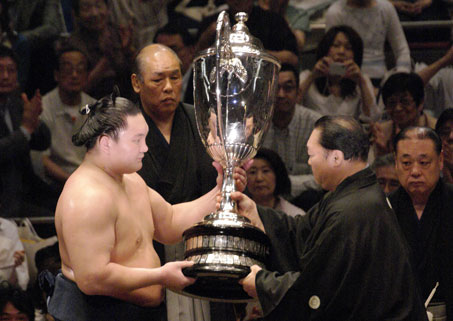
Promotion to yokozuna, the highest rank in professional sumo, is reserved for an ozeki who has dominated the top division — by convention, winning two tournaments in a row or putting together a comparable record — and who carries the dig... -
Danpatsu-shiki: The Sumo Retirement Ceremony
The danpatsu-shiki is the ceremony that marks a sumo wrestler's retirement, in which his topknot is ceremonially cut off in front of family, friends, sponsors and fellow rikishi. Guests come up one at a time to take a single snip with a ... -
The History of Sumo: From Sacred Ritual to National Sport
Sumo is Japan's national sport, with roots as a Shinto ritual performed over a thousand years ago. It began not as competition but as a way of praying to the gods for a good harvest, and it survives in Japan's earliest myth-histories and... -
What Is Chanko-Nabe? The Sumo Wrestler Diet Explained
Chanko-nabe is the protein-and-vegetable hot-pot at the centre of the sumo wrestler diet. A wide pot of stock is packed with chicken or other meat, tofu and heaps of vegetables, then eaten in huge quantities to build a wrestler's size. J... -
Salt, Water and Ritual: The Ceremony Before a Sumo Bout
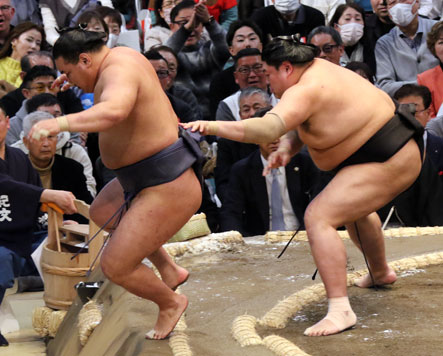
Before a sumo bout, wrestlers move through a sequence of Shinto-rooted rituals that turn the dohyo into sacred ground. They throw salt (shio) to purify the ring, rinse their mouths with chikara-mizu ("power water") and wipe with chikara-... -
Gyoji and Shimpan: Who Officiates a Sumo Bout
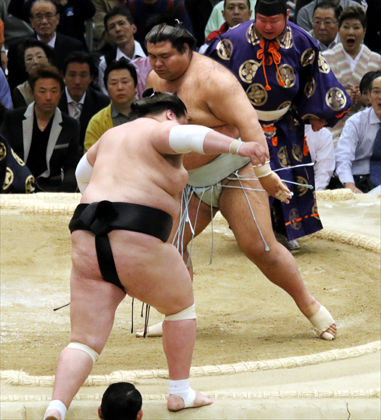
A sumo bout is officiated by the gyoji on the ring and the shimpan around it. The gyoji is the robed referee who stands on the dohyo, calls the wrestlers into action, follows the clash up close, and points his gunbai (war-fan) toward the... -
Sumo Ranks in Order: All 10 Ranks from Yokozuna to Jonokuchi
The banzuke is sumo's official ranking sheet: the ordered list of every wrestler in the sport, published before each grand tournament and arranged from the champions at the top to the lowest entrants at the bottom. It tells you who is ra... -
Sumo Stables Explained: Life Inside a Heya
A heya (sumo stable) is the training house where wrestlers live, train, eat and sleep together under the authority of a stablemaster. It is part dormitory, part dojo, part family. Every wrestler in professional grand sumo belongs to one,... -
Kimarite: The Winning Techniques of Sumo, Explained
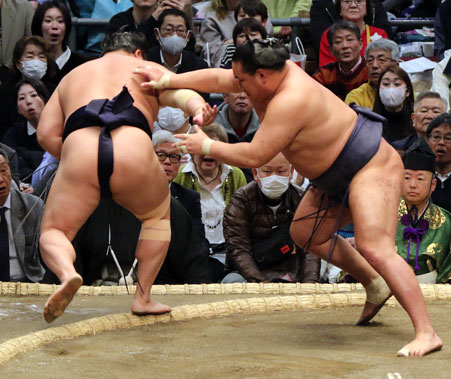
A kimarite is the officially named technique that wins a sumo bout, and there are 82 of them. The Japan Sumo Association recognizes 82 winning techniques, sorted into six official families, plus five recorded outcomes that are not techni... -
Mawashi: The Sumo Belt Explained
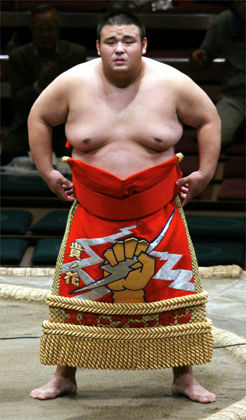
The mawashi is the thick, heavy belt a sumo wrestler wears in the ring, and it is far more than clothing. Wound tightly around the waist and between the legs, it is the only thing a wrestler wears in competition, and it doubles as the si...