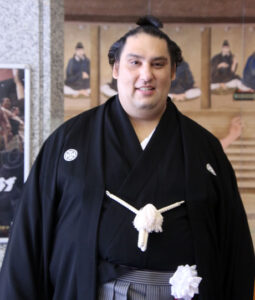
The former yokozuna Kakuryu, born in Mongolia, held his retirement topknot-cutting ceremony at the Ryogoku Kokugikan on June 3, 2023, in heavy rain. The day closed one of the sport’s highest careers, yet it left a question hanging over what comes next: Kakuryu did not succeed to an elder name.
Yokozuna is the highest rank in sumo, and a retiring yokozuna’s danpatsu-shiki draws the people who shaped his career to cut, one snip at a time, until the knot is gone. What follows is the tournament reporting of Michihiro Taguchi, the writer-photographer who covers sumo for The Sumo.
The rain, the queues, and the entrance
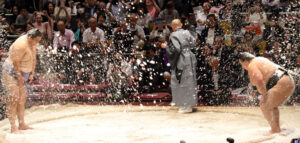
The weather shaped the morning before anything else. The rain that day halted the Tokaido Shinkansen and badly delayed overnight buses, and some attendees arrived late as a result. Doors opened at 10:00 and the program began at 11:00 — a one-hour gap the writer had long felt ran too long.
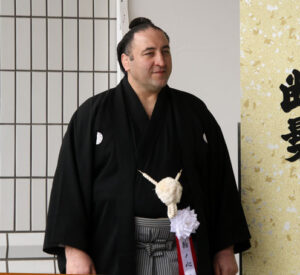
At the entrance, standing in the rain, Kakuryu and his wife greeted the arriving guests. With them were the Mutsu stablemaster, the former Kirishima, and Kirimayama, who had just been renamed Kirishima. The four met the crowd at the doors as it filed in out of the wet.
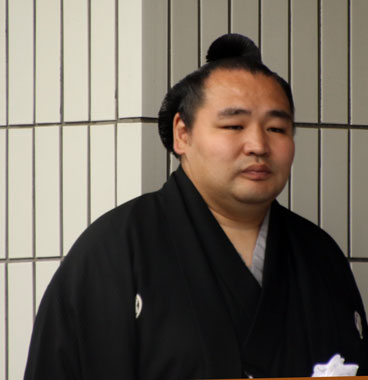
A final ring-entering ceremony
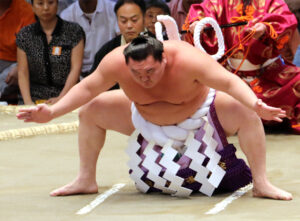
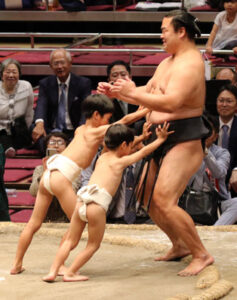
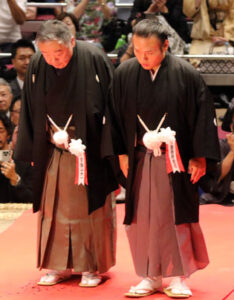
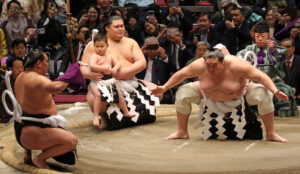
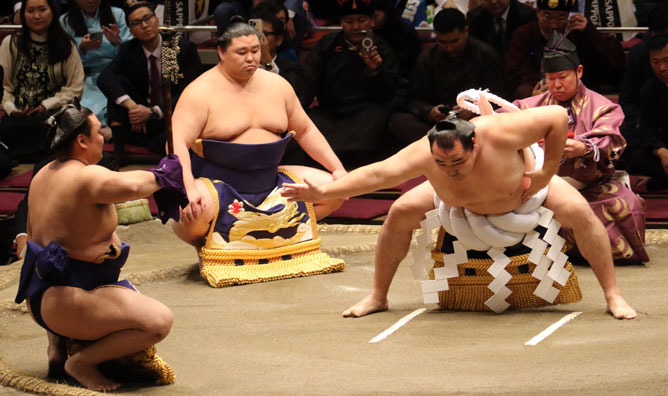
Two parts of the program stood out. The first was Kakuryu’s final bout, an exhibition match against his young son. The second was his final ring-entering ceremony, the dohyo-iri, performed in the regalia of the rank. Shodai served as the tsuyuharai, the dew-sweeper who heralds the entrance, and Kirishima as the tachimochi, the sword-bearer. It was over very quickly.
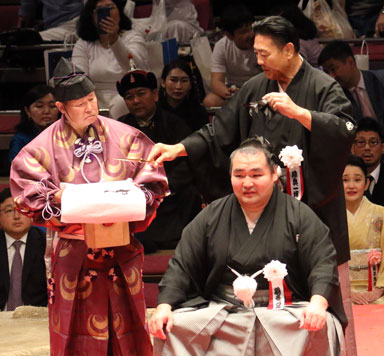
The topknot-cutting and who took part
The danpatsu-shiki drew about 400 people who each took a snip of the topknot. Among the notable guests, the comedy duo Nakagawake appeared. People from Mongolia attended as well, some arriving late because of the rain.
Former wrestlers such as Hakuba took snips. Women cut at the foot of the ring, the area below the dohyo. Two former yokozuna, Asashoryu and Harumafuji, joined in. Then the relatives followed.
The Association members took their turn last. As expected, the sekitori — the salaried wrestlers — and the elders of the Mutsu stable and the Tokitsukaze ichimon stepped up. Others who cut included Miyagino, the former Hakuho; Nishonoseki, the former Kisenosato; the former third Wakanohana; Terunofuji; and Tamawashi.
The final cut and a farewell
His current master, the Mutsu stablemaster, made the final ceremonial cut, the tomebasami, that severs the last of the knot. Master and disciple then bowed to the four directions.
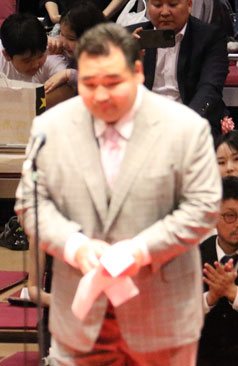
The family presented flowers, and Kakuryu’s eldest daughter read a letter aloud. To close, a freshly groomed Kakuryu gave his words of thanks. The ceremony ended without incident.
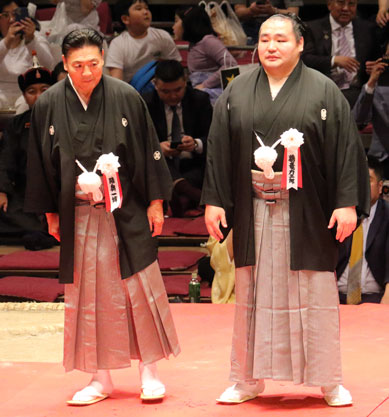
What came next
One point stood out from the rest of the day. Kakuryu did not succeed to an elder, or toshiyori, name. Under the elder-name system, a retired yokozuna is permitted to remain in the Association as an elder under his own ring name only for a limited period — five years. With no elder name taken, his longer-term future in the sumo world was left an open question.
Key Takeaways
- The former yokozuna Kakuryu, born in Mongolia, held his retirement topknot-cutting ceremony at the Ryogoku Kokugikan on June 3, 2023, in heavy rain.
- His final ring-entering ceremony used Shodai as the dew-sweeper (tsuyuharai) and Kirishima as the sword-bearer (tachimochi), and his final bout was an exhibition match against his young son.
- About 400 people each took a snip of the topknot, including Asashoryu, Harumafuji, Miyagino (the former Hakuho), Nishonoseki (the former Kisenosato), Terunofuji, and Tamawashi.
- The Mutsu stablemaster made the final cut, the tomebasami, after which master and disciple bowed to the four directions and Kakuryu’s eldest daughter read a letter aloud.
- Kakuryu did not take an elder name, and a retired yokozuna may stay in the Association under his own ring name for only five years, leaving his future an open question.
Frequently Asked Questions
When and where was Kakuryu’s retirement ceremony held?
It was held at the Ryogoku Kokugikan on June 3, 2023, in heavy rain. The rain halted the Tokaido Shinkansen and delayed overnight buses, so some attendees arrived late.
Who made the final cut to the topknot?
His current master, the Mutsu stablemaster, made the final ceremonial cut, the tomebasami. Master and disciple then bowed to the four directions.
Who took part in the topknot-cutting?
About 400 people each took a snip. They included the comedy duo Nakagawake, attendees from Mongolia, former wrestlers such as Hakuba, the former yokozuna Asashoryu and Harumafuji, relatives, and Association members such as Miyagino (the former Hakuho), Nishonoseki (the former Kisenosato), the former third Wakanohana, Terunofuji, and Tamawashi.
Why did Kakuryu not take an elder name?
Kakuryu did not succeed to an elder (toshiyori) name. A retired yokozuna is permitted to remain in the Association as an elder under his own ring name for only a limited period of five years, so his longer-term future in the sumo world was left an open question.