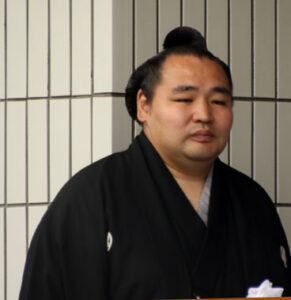
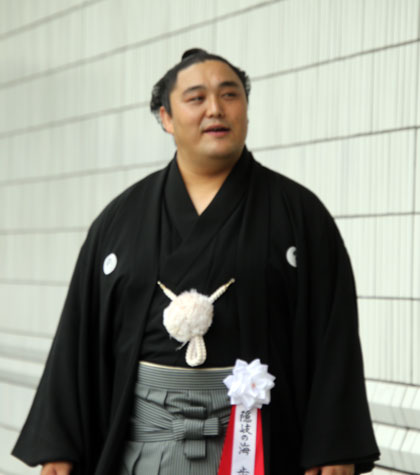
Okinoumi is a former makuuchi wrestler of the Hakkaku stable who retired in 2023 and now serves in the Japan Sumo Association as the Kimigahama elder. His retirement ceremony was held at the Ryogoku Kokugikan on September 30, 2023, where his final bout was fought in the Oki classical-sumo form of his home islands. This guide explains who Okinoumi was as a wrestler and walks through his farewell day in full.
What follows is the tournament reporting of Michihiro Taguchi, the site’s writer-photographer, who watched the day unfold from inside the Kokugikan. The account, and every photograph, comes from Taguchi at the venue.
Key Takeaways
- Okinoumi entered sumo under the ringname Fukuoka and reached makushita in six tournaments, then spent about three years stuck there before breaking through.
- He won the makushita championship at 7-0 in January 2009, earned promotion to juryo, and took the name Okinoumi.
- His peak came in September 2016, when he beat two yokozuna and three ozeki and won the Outstanding Performance prize.
- His retirement ceremony was held at the Ryogoku Kokugikan on September 30, 2023, marking his succession to the Kimigahama elder name.
- After retiring he remained in the Japan Sumo Association as the Kimigahama elder.
Who is Okinoumi?
Okinoumi competed in the lower divisions under the ringname Fukuoka. His debut cohort included Goeido, Tochiozan, and Toyohibiki. As Fukuoka he passed through the divisions up to makushita in just six tournaments. Then progress stalled. He spent about three years stuck in makushita before he found his way up.
The turn came at the January 2009 tournament. Ranked East makushita number one, he went 7-0, won the makushita championship, and secured promotion to juryo. At that point he took the name Okinoumi. His peak arrived at the September 2016 tournament, where he beat two yokozuna and three ozeki and was awarded the Shukun-sho, the Outstanding Performance prize. That year he had already posted majority records for three tournaments against the top ranks.
A hot day at Ryogoku
It was a hot day. The writer reached Ryogoku at around 10:20. Same-day tickets were on sale, but by one account heard on site, only chair-A seats were left.
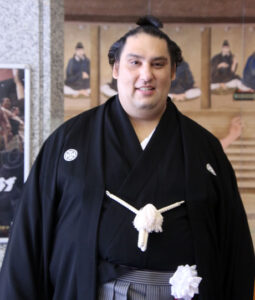
At the Kokugikan entrance, Okinoumi and his wife were kept busy posing for commemorative photos with guests. Further inside the entrance stood Chiyoshoma, Asanoyama, and Hokutofuji. The program began at 11:20.
An Oki-style farewell bout
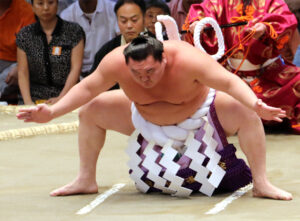
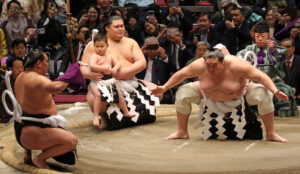
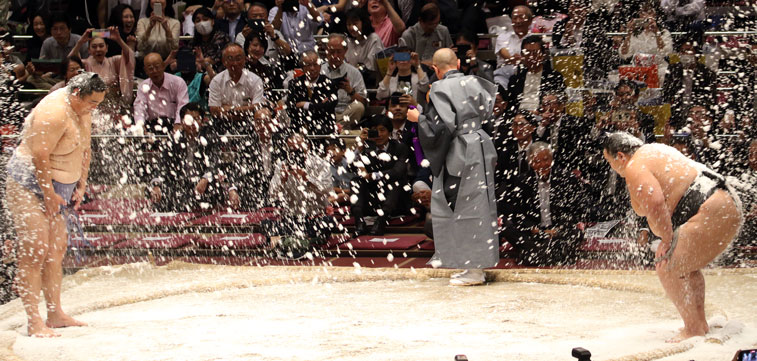
Okinoumi’s final bout was performed in the Oki classical-sumo form, a traditional style from the Oki Islands. His opponent was Okinofuji. The referee, or gyoji, and the ring announcer, the yobidashi, used distinctive movements. As the wrestlers mounted the ring, salt was flung in storms from behind, and again after a win, leaving a ring buried in salt. It was contested as a two-bout match.
A children’s dance
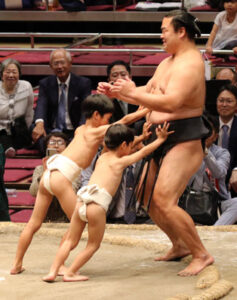
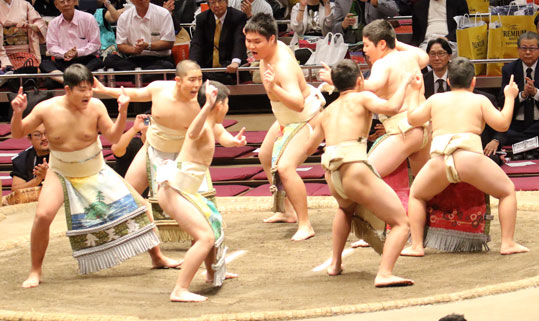
The program also featured a children’s dance.
The topknot-cutting and the final cut
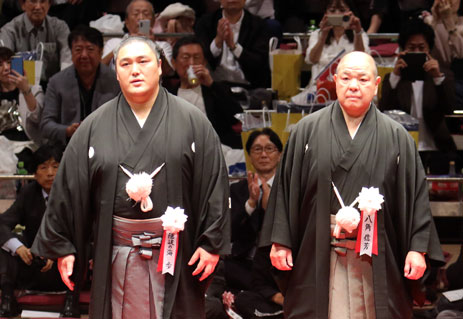
In the danpatsu-shiki, about 300 people took a snip. Okinoumi turned to face each side in turn: front, then east, then the far side, then west. OBs of the Hakkaku stable cut. There was no women’s section.
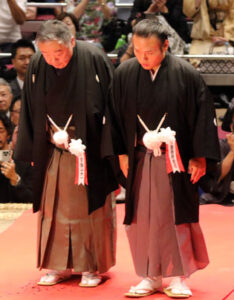
Last came the relatives and the Association members. Among them were the former Ozora; the former Ikioi, now the Kasugayama elder; the former Takekaze, now the Oshiogawa elder; and others. As wrestlers, Terunofuji and Asanoyama cut, along with the stable’s salaried wrestlers Kitanowaka and Hokutofuji. Finally his master, Hakkaku, the former Hokutoumi, made the final cut, the tomebasami. They bowed to the four directions, ending the ceremony. His wife then presented flowers.
Where Okinoumi is now
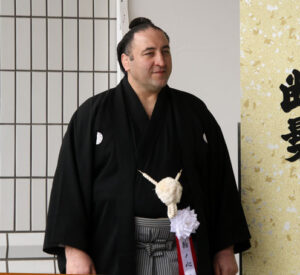
After retiring, the former Okinoumi remained in the Japan Sumo Association as the Kimigahama elder. His ceremony was a fitting send-off for a wrestler whose career ran the long road from the lower divisions to the top ranks. For other recent farewells, see the Hokutofuji retirement ceremony and the Terunofuji retirement.
Frequently Asked Questions
Who is Okinoumi?
Okinoumi is a former makuuchi wrestler of the Hakkaku stable. He competed in the lower divisions under the ringname Fukuoka, then took the name Okinoumi on promotion to juryo in 2009. He retired in 2023 and now serves as the Kimigahama elder in the Japan Sumo Association.
What was Okinoumi’s peak achievement?
At the September 2016 tournament, Okinoumi beat two yokozuna and three ozeki and was awarded the Shukun-sho, the Outstanding Performance prize. He had posted majority records against the top ranks for three tournaments that year.
Why was Okinoumi first known as Fukuoka?
Fukuoka was his ringname in the lower divisions. His debut cohort included Goeido, Tochiozan, and Toyohibiki. He reached makushita in six tournaments but then spent about three years there before winning the makushita championship at 7-0 in January 2009, which earned him promotion to juryo and the name Okinoumi.
When and where was the retirement ceremony held?
It was held on September 30, 2023, at the Ryogoku Kokugikan. The formal title marked both his retirement and his succession to the Kimigahama elder name.
What was the Oki classical-sumo bout?
It was Okinoumi’s final bout, performed in the Oki classical-sumo form, a traditional style from the Oki Islands. His opponent was Okinofuji, and it was contested as a two-bout match.
Who made the final cut, and what is Okinoumi’s elder name?
His master, Hakkaku, the former Hokutoumi, made the final cut, the tomebasami. The ceremony marked Okinoumi’s succession to the Kimigahama elder name, which he holds in the Japan Sumo Association.