Tokyo’s east side, where the Sumida River curves through the old downtown, lets you fold two very different sides of the city into a single day: the temple-town atmosphere of Asakusa and the sumo world of Ryogoku, the sumo town. Think of this as a loose shape rather than a fixed schedule. You could start with old-Tokyo sightseeing in the morning, then drift over to the home of sumo later in the day, and adjust the pace as you go. Nothing here is timed to the minute, so let the day breathe and follow whatever catches your eye.
Why Asakusa and Ryogoku pair so well
Both districts belong to Tokyo’s old downtown, the shitamachi, and both sit close together on the east side near the Sumida River. They are only a short train ride apart, which is what makes joining them in one day feel natural rather than forced. The two offer very different things, and that contrast is the appeal. Asakusa gives you temple-town tradition: a famous old temple, a grand gate, and a shopping street full of traditional snacks. Ryogoku gives you sumo, built around the national arena and the food the wrestlers are known for. Spend a morning in one and an afternoon in the other, and you get a clear sense of how everyday tradition and the world of sumo sit side by side in this part of Tokyo.
A morning in Asakusa
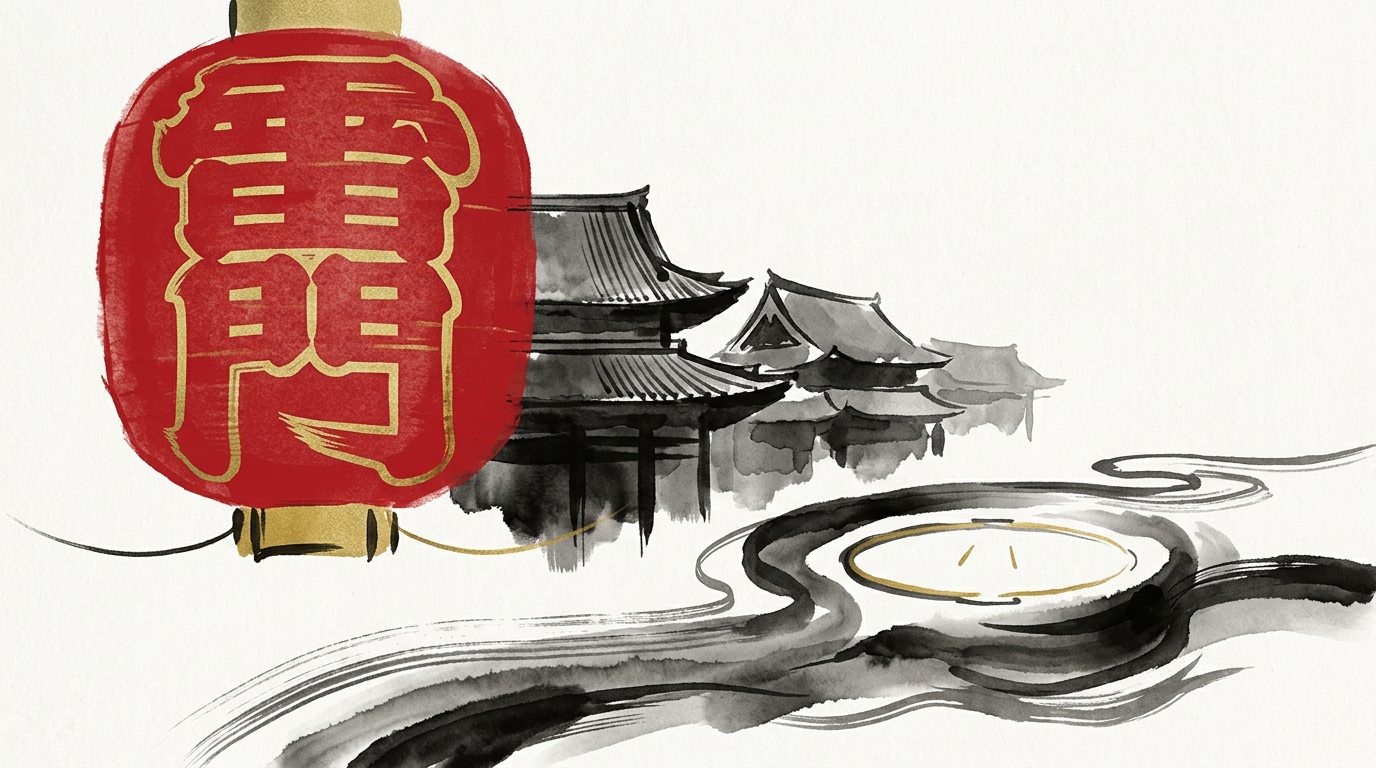
Asakusa is one of the best places to feel old Tokyo, and the natural centre of it is Senso-ji, the city’s most famous old Buddhist temple. Most people arrive at the Kaminarimon, the “Thunder Gate,” with its enormous red lantern hanging in the entrance. It is the iconic outer gate and a favourite spot for a first photo. From there, Nakamise-dori leads toward the temple, a shopping street lined with traditional stalls selling snacks and souvenirs. Take your time along it, sample whatever looks good, and let the crowd carry you toward the temple grounds.
The whole area keeps a downtown, old-Tokyo feel. As you wander, you will notice rickshaws moving through the streets and visitors dressed in rented kimono, both part of the everyday scene here. If either appeals to you, treat it as something to look into rather than something to assume, since details change. Plan to confirm hours and prices on the official or current sources, and check whether any particular spot is open before you build your morning around it.
Crossing over to Ryogoku
Asakusa and Ryogoku sit two stops apart on the map but there is no single line between them, so every route involves one change. Which change you pick matters more than the minute or two of difference in travel time, because one of them takes place inside the station and the other puts you out on the street.
| Via Asakusabashi | Via Kuramae | |
|---|---|---|
| Leg 1 | Toei Asakusa Line, Asakusa (A-18) to Asakusabashi (A-16), 2 stops, towards Nishi-magome | Toei Asakusa Line, Asakusa (A-18) to Kuramae (A-17), 1 stop, towards Nishi-magome |
| Change | Inside the station, to the JR line | Outside, on the street: 270 m, to the Toei Oedo Line |
| Leg 2 | JR Chuo-Sobu Line, Asakusabashi to Ryogoku, 1 stop | Toei Oedo Line, Kuramae (E-11) to Ryogoku (E-12), 1 stop, towards Daimon |
| Best for | Rain, luggage, prams, first visit | Staying on one operator’s network |
The Kuramae catch is the one worth knowing in advance, because the map hides it. Kuramae looks like a single interchange station and is signed as one, but the Asakusa Line and Oedo Line platforms are two separate buildings. Toei’s own station diagram labels the connection a 270-metre above-ground transfer: you go up, out through the ticket gates, along the pavement, and back down into a different entrance. In fine weather it is a pleasant few minutes. With suitcases, small children or rain, it is the wrong choice, and the Asakusabashi route, where you change to the JR line without leaving the station, is the one to take.
Going the other way, from Ryogoku back to Asakusa, simply reverse either route. River boats also run on the Sumida and turn the crossing itself into part of the day, though they run to their own timetable and are a sightseeing choice rather than a reliable connection, so check the operator’s schedule before you count on one.
An afternoon in Ryogoku
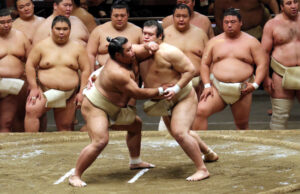
Ryogoku is the district built around sumo, and its landmark is the Ryogoku Kokugikan, the national sumo arena. Even when no tournament is running, the building anchors the neighbourhood and tells you instantly that you have arrived in sumo’s home ground. The signature food here is chanko-nabe, the hearty hot-pot the wrestlers eat, and restaurants in the area serve it. The streets themselves carry the sumo town feel, and a slow walk is the best way to take it in. If you want to plan ahead for a tournament day, read up on how to get tickets before you go, since that is the part most worth sorting out early.
If a tournament is on
Whether this becomes a true “sumo day” comes down to timing. Live bouts at the Kokugikan happen only during the Tokyo grand tournaments, held in January, May, and September. If your visit lines up with one of those, you can watch the wrestlers compete in person, which is the highlight of the whole pairing. Tickets can sell out, so book ahead and treat them as the thing to lock in first. There are customs to follow inside the arena, and a quick read of sumo etiquette will help you fit in comfortably. Outside tournament time there are no live bouts, so the draw becomes the building, the food, and the streets, which still make Ryogoku worth the trip.
Before you go
The lines and stations above are fixed, but the things that change are worth a look the week before. Confirm the tournament dates, check opening hours and whether the facilities you want are open, and look up current times and fares with an up-to-date journey planner. If you are thinking about the river, check the boat schedules separately. Restaurant details shift too, so confirm those on current sources, and treat any rickshaw ride or kimono rental as something to look into and book on the day’s official channels. A little checking ahead keeps the loose plan easy and the day relaxed.
Key Takeaways
- Asakusa and Ryogoku sit close together on Tokyo’s east side near the Sumida River, which makes pairing them in one day easy and natural.
- The easiest crossing is the Toei Asakusa Line to Asakusabashi, then the JR Chuo-Sobu Line one stop to Ryogoku, because that change happens inside the station.
- Changing at Kuramae instead means a 270-metre walk outside the ticket gates between two separate station buildings, which is worth avoiding with luggage or in the rain.
- Treat the day as a flexible shape, not a fixed schedule: an old-Tokyo morning in Asakusa, then a sumo afternoon in Ryogoku.
- In Asakusa, head for Senso-ji, the Kaminarimon and its red lantern, and Nakamise-dori, soaking up the old-downtown feel.
- In Ryogoku, the Kokugikan, the chanko-nabe, and the neighbourhood itself carry the sumo town atmosphere even outside tournament time.
- Live bouts happen only during the January, May, and September tournaments, so confirm dates, hours, routes, and prices on official or current sources before you go.
Frequently Asked Questions
Can you see Asakusa and sumo in one day?
Yes. The two are close together on Tokyo’s east side near the Sumida River, a short train ride apart, so a single day comfortably covers both. The one catch is that live bouts happen only during the January, May, and September tournaments, so seeing actual sumo depends on your timing rather than on distance.
How do you get from Asakusa to Ryogoku?
Take the Toei Asakusa Line from Asakusa (A-18) two stops to Asakusabashi (A-16), then change inside the station to the JR Chuo-Sobu Line for one stop to Ryogoku. The alternative runs one stop to Kuramae (A-17) and changes to the Toei Oedo Line for one stop to Ryogoku (E-12), but Toei’s station diagram marks that as a 270-metre above-ground transfer, meaning you leave the gates and walk along the street between two separate station buildings. With luggage or in the rain, use Asakusabashi. River boats on the Sumida are a scenic third option on their own timetable.
What is there to see in Asakusa?
The main draws are Senso-ji, the celebrated old temple at the heart of the district, the Kaminarimon with its giant red lantern, and Nakamise-dori, the shopping street lined with traditional snack and souvenir stalls. Beyond those, the old-downtown streets reward a slow, unhurried wander.
Do you need a sumo ticket for this day?
Only if you want to watch live bouts during a tournament. Outside tournament time there is no live sumo, and Ryogoku’s draw becomes the building, the food, and the town itself, none of which need a ticket. Confirm the dates and hours on current sources so you know which kind of day to expect.