Jungyo are sumo’s regional exhibition tours, held in the gaps between the six grand tournaments. They bring the sport to towns across Japan and sometimes abroad, mixing exhibition bouts with morning training and close fan interaction. Results do not count toward the rankings; the goal is grassroots growth.
Exhibitions, not competition. Jungyo bouts do not count toward the banzuke, the official ranking sheet, so the day stays looser and warmer than a tournament.
Three things at once. A tour day runs morning training (keiko), exhibition bouts, and direct fan interaction side by side.
Closer to the wrestlers. With the pressure of a tournament lifted, wrestlers pose for photos, sign autographs, and meet local crowds.
Built for grassroots growth. Jungyo carry live sumo to regions that rarely host a tournament and reward fans far from the big arenas.
A stage for rising talent. Younger and lower-ranked wrestlers get seen on the same card as the headline names, long before they reach the top.
What is jungyo?
Jungyo (巡業, “tour”) are the regional tours that professional sumo stages in the gaps between its six grand tournaments. While a honbasho keeps the sport anchored in a handful of big-city arenas, jungyo take it on the road, carrying live sumo to towns and cities across Japan, and on occasion overseas.
The key thing to understand is what jungyo are not: they are not ranked competition. The bouts are exhibitions. Whatever happens in the ring on a tour day does not move a wrestler up or down the banzuke (the official ranking sheet). That fact sets the tone for the whole day, which is looser, warmer, and more open than a tournament.
What happens on a jungyo day
A tour day is built around three things happening side by side: training, exhibition bouts, and direct contact with fans.
- Morning training (keiko). Wrestlers run through the same conditioning and practice drills they would do back home, often in full view of spectators. For many fans, watching a sumo wrestler train up close is a highlight of the visit.
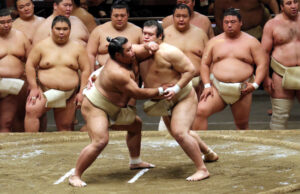
- Exhibition bouts. The wrestlers face each other in the ring, but with the stakes removed. Without a record on the line, the mood is more relaxed and the bouts can be more playful.
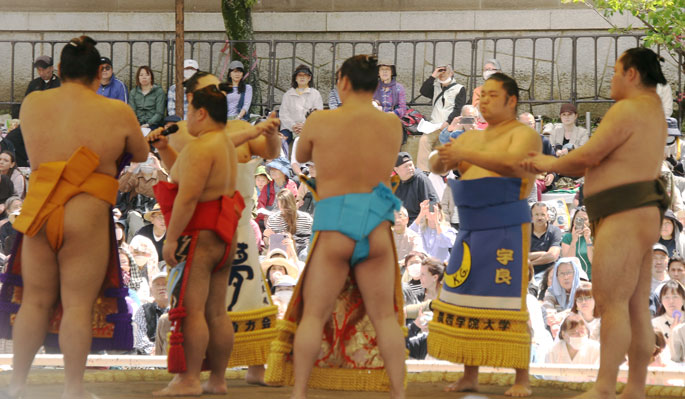
- Fan interaction. This is what sets jungyo apart from a tournament. Wrestlers pose for photos, sign autographs, and meet local crowds in a way that is hard to manage during a honbasho.
Why wrestlers are so accessible
At a grand tournament, wrestlers are locked into a fifteen-day campaign that decides their ranking and their pay. On tour, that pressure lifts. The day is built for the audience, not the standings, so the men who feel distant inside a packed arena become approachable, photographed, and within reach.
Why sumo holds jungyo
Jungyo serve several purposes at once, and none of them is about crowning a champion.
| Purpose | What it does |
|---|---|
| Grow the grassroots | Brings live sumo to regions that rarely host a tournament |
| Reward regional fans | Lets fans far from the big arenas see the sport in person |
| Keep wrestlers sharp | Keeps the top names active and conditioned between tournaments |
| Showcase rising talent | Puts younger and lower-ranked wrestlers in front of crowds, alongside the stars |
That last point matters for the sport’s future. A jungyo day is a rare chance for a younger or lower-ranked wrestler to be seen on the same card as the headline names, building recognition long before they reach the top of the banzuke. Wrestlers from across the ranks travel together, often training and competing alongside the more senior members of their sumo stable (heya) and beyond.
How jungyo differ from a honbasho
The two are easy to confuse if you only know that both involve wrestlers in a ring. Here is the clean split:
- A honbasho is ranked competition. Every bout counts. Wins and losses change the banzuke and a wrestler’s standing.
- Jungyo are exhibitions. Results do not count. The day is shared between training, bouts, and fans.
- Access is inverted. A honbasho keeps wrestlers focused and at a distance; jungyo are designed for closeness and contact.
If you want to study sumo at its most competitive, go to a tournament. If you want to meet the sport and the people in it, a jungyo day is the closest you will get.
Should you go to a jungyo?
For a newcomer or a visitor to Japan, jungyo can be the better first encounter with sumo. You see the training, you watch real bouts, and you get a level of access to the wrestlers that a tournament never allows. For longtime followers, it is a chance to catch the sport in a region that does not otherwise host it, and to spot the next generation before they make their names.
Frequently asked questions
Do jungyo results count toward a wrestler’s ranking?
No. Jungyo bouts are exhibitions, not ranked competition. Whatever happens in the ring on a tour day does not affect the banzuke, the official ranking sheet. Ranking is decided only at the six grand tournaments (honbasho).
What is the difference between jungyo and a honbasho?
A honbasho is a grand tournament where every bout counts toward the rankings. Jungyo are the regional tours held in the gaps between those tournaments. They are exhibitions, with no bearing on a wrestler’s record, and they put fans far closer to the wrestlers.
Can you meet sumo wrestlers at a jungyo?
Yes, and that is one of the main reasons to go. On a jungyo day wrestlers are far more accessible than at a tournament, posing for photos, signing autographs, and meeting local crowds. The atmosphere is built around fan interaction.
What happens during a jungyo day?
A jungyo day mixes three things: morning training (keiko) that fans can often watch up close, exhibition bouts between wrestlers, and direct fan interaction. The pressure of a tournament is absent, so the whole day feels more open and relaxed.
Why does sumo hold regional tours?
Jungyo grow the sport’s grassroots by taking live sumo to towns that rarely host a tournament, reward fans in those regions, and keep wrestlers active and sharp between tournaments. They also give younger and lower-ranked wrestlers a chance to be seen alongside the stars.
Are jungyo held outside Japan?
They are usually held in towns and cities across Japan, but sumo does sometimes take jungyo overseas. The format stays the same wherever they go: exhibition bouts, training, and close access to the wrestlers rather than ranked competition.