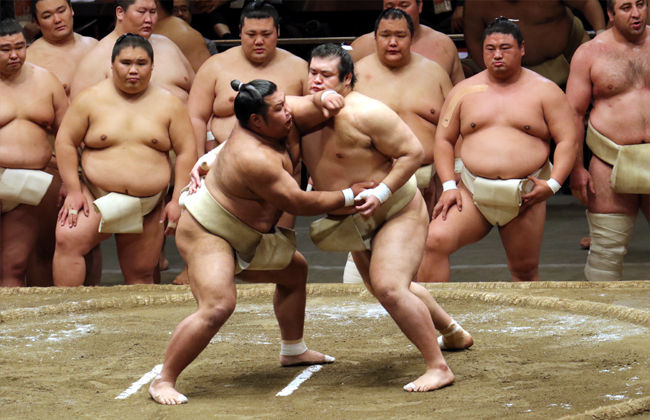
Grand sumo comes to Tokyo on forty-five days a year, and only those days put ranked wrestlers on the ring at the Ryogoku Kokugikan. If your trip falls on any of the other three hundred or so days, or if the tournament you wanted is sold out, you have not missed sumo entirely. What changes is what you are looking at. Morning practice, a regional tour, the museum inside the arena and a ticketed sumo show are four different things, and travel listings tend to blur them into one. This page separates them, so you know which one you are booking.
The four ways to see sumo, side by side
The single most useful distinction is whether you are watching salaried, ranked wrestlers competing for a result that changes their rank. Only one of these four does that.
| What it is | Ranked wrestlers competing? | Affects the rankings? | When |
|---|---|---|---|
| Honbasho (grand tournament) | Yes | Yes | Tokyo: January, May, September — 15 days each |
| Jungyo (regional tour) | Yes | No — exhibition | Between tournaments, around the country |
| Keiko (morning practice) | Yes, but training, not competing | No | Mornings, at a stable |
| Ticketed sumo show | No — a staged performance | No | Year-round, at private venues |
The forty-five days: Tokyo’s own tournaments
Three of the six annual grand tournaments are held in Tokyo, each running fifteen days, which is where the figure of forty-five comes from. The other three are in Osaka, Nagoya and Fukuoka. If your dates fall inside one of the Tokyo windows below, ignore the rest of this page and go and get a ticket.
| Tokyo tournament | Day 1 | Final day | Advance tickets on sale from |
|---|---|---|---|
| September 2026 (Aki) | September 13, 2026 | September 27, 2026 | August 8, 2026 |
| January 2027 (Hatsu) | January 10, 2027 | January 24, 2027 | December 5, 2026 |
| May 2027 (Natsu) | May 9, 2027 | May 23, 2027 | April 10, 2027 |
| September 2027 (Aki) | September 12, 2027 | September 26, 2027 | August 7, 2027 |
Selling out is normal, not exceptional. As of August 24, 2026, the Japan Sumo Association’s own English site listed the September 2026 tournament as sold out on every single day, two and a half weeks before the first bout. Plan on the assumption that a tournament you want will be gone unless you buy near the on-sale date.
Morning practice at a stable, and what nobody will tell you plainly
Wrestlers live and train at a stable, a heya, and the morning training session is called keiko. Watching it is the closest a visitor gets to sumo as the wrestlers themselves experience it: no crowd, no ceremony, just the sound of bodies hitting each other in a small room. Some stables admit visitors. That is where the clarity ends.
The Japan Sumo Association publishes an official directory of its stables, listing forty-five of them by name. What it does not publish, in English or in Japanese, is any visiting policy: no opening hours, no booking page, no rules for spectators, no central point of contact for arranging a visit. There is no official system to book a stable visit through.
This matters because a great deal of confident-sounding advice about stable visits circulates online, and none of it comes from the association. Rules described on tour-operator pages and travel blogs are that operator’s arrangement with that stable, not a policy that applies to sumo generally, and they can be out of date. Each stable decides for itself, and a stable that admitted visitors last year may not this year. Confirm with the stable itself or with whoever is actually arranging your visit, and treat any list of “the rules” you find elsewhere, including a confident one, as unverified.
One thing is worth saying about conduct even so. Keiko is the wrestlers’ working morning, held in the room where they live. It is not a performance staged for an audience, and the people running it are not hosting an attraction.
The Sumo Museum: free, inside the arena, and closed when you would expect it open
The Sumo Museum sits on the first floor of the Ryogoku Kokugikan itself, so it puts you inside the building even on a day with no bouts. Admission is free. It holds one exhibition room, with displays rotated through the year from a collection of woodblock prints, old ranking sheets and ceremonial aprons.
| Detail | |
|---|---|
| Location | First floor, Ryogoku Kokugikan, 1-3-28 Yokoami, Sumida-ku, Tokyo 130-0015 |
| Admission | Free. During a grand tournament you need an arena ticket to get in |
| Hours (regular period) | 10:00–16:30, last entry 16:00 |
| Hours (tournament days) | 12:30–16:00, arena ticket required |
| Closed | Saturdays, Sundays and national holidays, with some exceptions; year-end and New Year; also between exhibition changes |
Read that closing line again, because it catches people out. The museum is shut at weekends and on public holidays, which is exactly when most visitors have a free day. It is a weekday stop. Check the association’s museum calendar before you build a morning around it, since the room also closes while displays are being changed.
Jungyo: the tour that brings ranked wrestlers to you
Between tournaments the wrestlers travel on regional tours called jungyo, and these are the overlooked option. The same ranked wrestlers you would see at the Kokugikan appear at a local venue, but the day is an exhibition, so nothing is at stake and the atmosphere loosens accordingly. Wrestlers are far more approachable than they ever are during a tournament.
The catch is geography rather than availability. The association publishes the tour schedule in English, and the stops move around the country by season. The spring 2026 tour, for instance, included several dates inside Tokyo and its neighbouring prefectures, so a jungyo day is not automatically a long trip. Check the published schedule against your dates before assuming you have to be in Tokyo in a tournament month.
Ticketed sumo shows
Several private venues in Tokyo, a number of them around Asakusa, sell an evening or lunchtime sumo show, usually bundled with a chanko hot-pot meal and often with a chance to push against a wrestler yourself. These are commercial performances, staged for an audience, and the people in the ring are not the ranked wrestlers of the current banzuke. That is not a criticism. A show is genuinely enjoyable, it runs year-round, it works with children, and it explains the sport at a pace a first-timer can follow.
It is worth knowing what you are buying, though, because the listings rarely spell it out. The words “authentic”, “real” and “experience” appear on show pages and on stable-visit pages alike. If it matters to you whether the wrestlers are competing for a rank, the test is simple: ask whether the bouts count toward the banzuke. At a show, they do not.
One practical warning from the association itself: it publishes a notice on its English homepage cautioning visitors about unofficial ticket websites, and directs buyers to its own official ticket service. That warning is about grand tournament tickets specifically. If a site is selling you a tournament seat, check it against the official channel before paying.
Which one to choose
If your dates touch a Tokyo tournament, take the tournament, even a cheap upper-tier chair seat. Nothing else is the same. If they do not, and you want the real sport, look at the jungyo schedule first, because it is the only other place ranked wrestlers actually appear. If you want the atmosphere of the sumo world rather than the competition, spend a morning in Ryogoku and put the free museum in the middle of it, on a weekday. If you are travelling with children or want a guaranteed, bookable evening, a show does that job well, as long as you know it is a show.
Key Takeaways
- Tokyo hosts grand sumo on 45 days a year: January, May and September, fifteen days each, at the Ryogoku Kokugikan.
- Tournaments sell out early. The September 2026 tournament was listed as sold out on all dates by August 24, 2026.
- The Japan Sumo Association lists its 45 stables but publishes no visiting policy at all, so there is no official way to book morning practice and no official set of rules.
- The Sumo Museum inside the Kokugikan is free, but it closes at weekends and on national holidays, making it a weekday stop.
- Jungyo regional tours are the only other occasion when ranked wrestlers appear, and some stops fall in or near Tokyo.
- Ticketed sumo shows are staged performances, not competition, and the bouts do not count toward the rankings.
Frequently Asked Questions
Can you see sumo in Tokyo when there is no tournament?
Not as competition. Ranked wrestlers compete in Tokyo only during the January, May and September tournaments, 45 days in total. Outside those windows you can visit the free Sumo Museum inside the Kokugikan on a weekday, watch morning practice at a stable that admits visitors, catch a jungyo regional tour, or book a ticketed sumo show, which is a staged performance rather than a contest.
Can tourists watch sumo morning practice in Tokyo?
Some stables admit visitors, but there is no official route to arrange it. The Japan Sumo Association publishes a directory of its 45 stables and no visiting policy of any kind: no hours, no booking page, no spectator rules. Each stable sets its own terms and can change them. Confirm directly with the stable or with whoever is arranging your visit, and treat rules quoted on third-party pages as that operator’s arrangement rather than sumo-wide policy.
Is the Sumo Museum free, and when is it open?
Admission is free. In the regular period it opens 10:00 to 16:30 with last entry at 16:00, and on tournament days 12:30 to 16:00, when you also need an arena ticket to get into the building. It closes on Saturdays, Sundays and national holidays with some exceptions, over the year-end and New Year period, and while exhibitions are being changed, so check the association’s museum calendar first.
Are the sumo shows in Asakusa real sumo?
They are real performances by people who can wrestle, but they are not grand sumo. The bouts are staged for an audience and do not count toward the banzuke, and the performers are not the ranked wrestlers of the current rankings. A show is an enjoyable and reliable way to spend an evening, particularly with children. It is simply a different thing from a tournament, and the listings do not always make that clear.
When is the next tournament in Tokyo?
The September 2026 tournament runs from September 13 to September 27, 2026 at the Ryogoku Kokugikan, and was already sold out on all dates as of August 24, 2026. After that the Tokyo dates are January 10 to 24, 2027, and May 9 to 23, 2027, with advance tickets going on sale on December 5, 2026 and April 10, 2027 respectively.
What is the difference between jungyo and a grand tournament?
Both feature ranked wrestlers, but a jungyo is an exhibition tour held between tournaments and nothing that happens there changes anyone’s rank. Because there is no result at stake, the day is more relaxed and the wrestlers are much easier to approach. A grand tournament is the competition itself, fifteen days of bouts that decide the next set of rankings.
Sources
All figures on this page come from the Japan Sumo Association’s official English site and were checked on August 24, 2026: the Grand Tournament Schedule for tournament dates and on-sale dates, the Sumo Stable Guide for the stable directory, the Sumo Museum pages for the museum’s hours, address and admission, and the tour schedule for jungyo. Dates, hours and prices change, so check the association’s own pages before you travel.


