Guide– category –
-

Shikona: How Sumo Wrestlers Get Their Ring Names
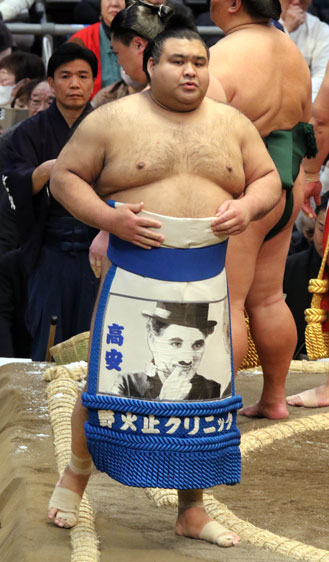
A shikona (ring name) is the fighting name a sumo wrestler competes under and appears on the banzuke instead of his birth name. The stablemaster usually chooses it, often drawing on the wrestler's real name, stable tradition, a master's ... -
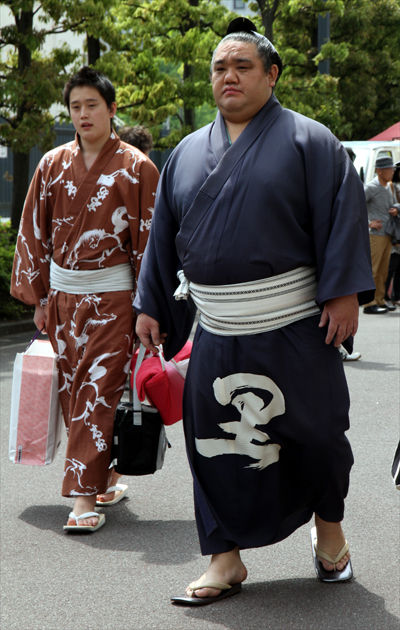
Tsukebito: The Apprentice Attendants Who Serve Sumo’s Sekitori
A tsukebito (tsuke-bito, "attached person") is a lower-ranked sumo wrestler assigned to attend to a sekitori, a salaried wrestler in the top two divisions. The tsukebito carries his bags, runs errands, and helps him dress and bathe. The ... -
Kensho: The Prize-Money Banners That Circle the Sumo Ring
Kensho (kensho-kin) is sponsor-funded prize money attached to individual top-division sumo bouts. Each banner is worth 70,000 yen; the Japan Sumo Association takes a 10,000 yen fee, leaving the winning wrestler 60,000 yen. The loser gets... -
Sekitori: The Line Between Juryo and the Unsalaried Ranks, and Why It Changes Everything
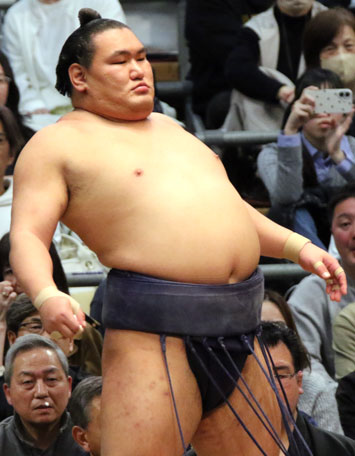
A sekitori is a sumo wrestler ranked in the top two divisions, Juryo and Makuuchi. Reaching Juryo is the threshold. Cross it and the Japan Sumo Association pays you a monthly salary, gives you attendants, a silk mawashi, and a spot in th... -
Kachikoshi and Makekoshi: How a Winning or Losing Record Moves a Wrestler Up Sumo’s Banzuke
Kachikoshi means a majority-winning record and makekoshi means a majority-losing record over a single tournament. In sumo's top two divisions, where wrestlers fight 15 bouts, 8 wins earns kachikoshi and 8 losses brings makekoshi. Kachiko... -
What Is a Sumo Wrestler? The Complete Guide to the Rikishi
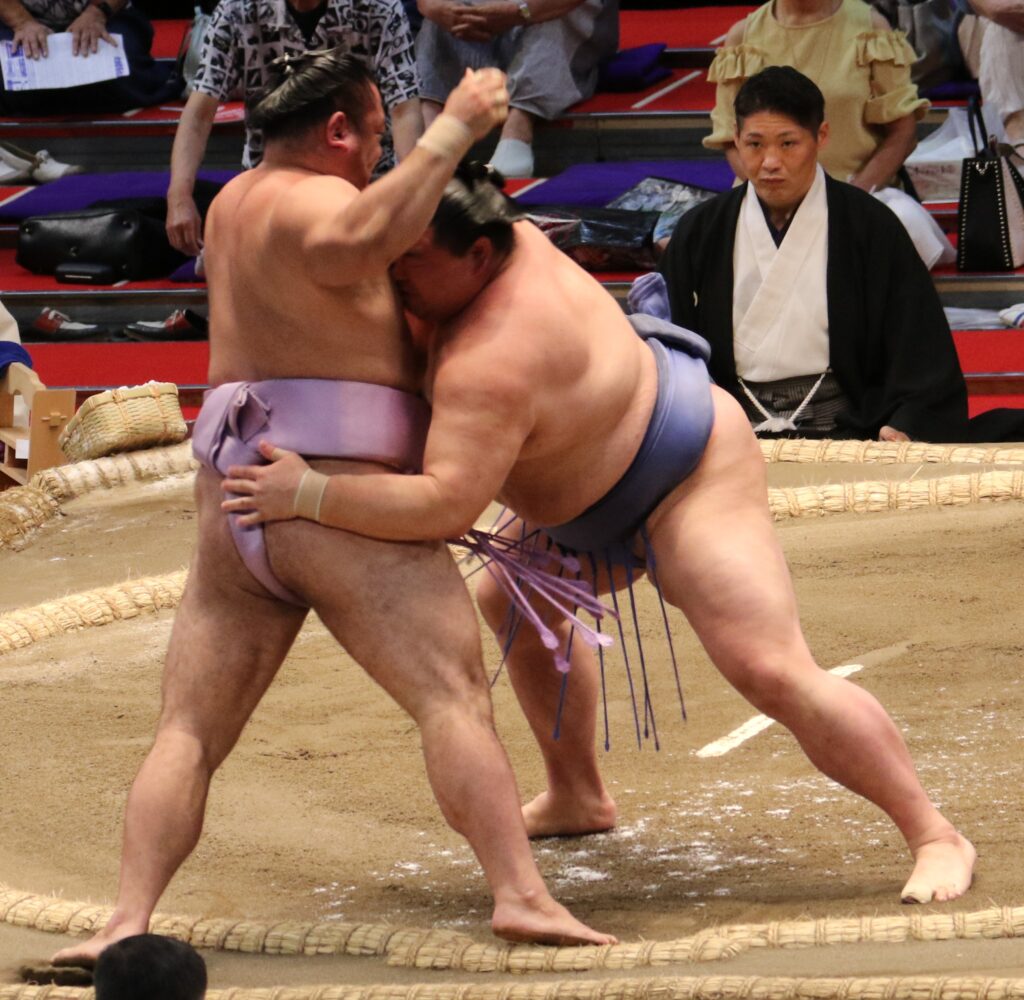
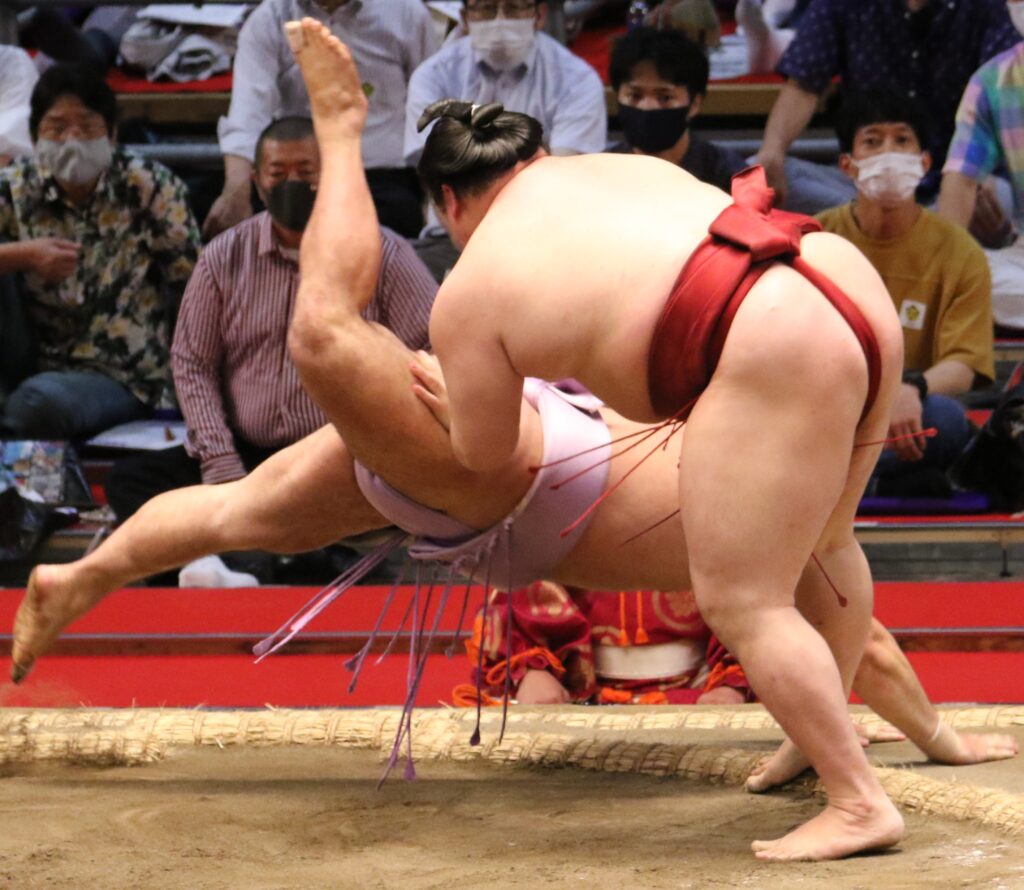
A sumo wrestler, or rikishi, is a professional athlete in Japan's national sport of sumo, who wins by forcing his opponent out of the ring or to the ground. Sumo has no weight classes, so a lighter man can be matched against a far heavie... -
Chonmage: The Sumo Topknot and the Oicho-mage Explained
The chonmage is the traditional topknot sumo wrestlers wear, and which style a man wears is decided by his rank. The Japan Sumo Association states it plainly: the rank of a wrestler determines how his long hair is arranged. Makuuchi and ... -
Dohyo-iri: The Sumo Ring-Entering Ceremony Explained
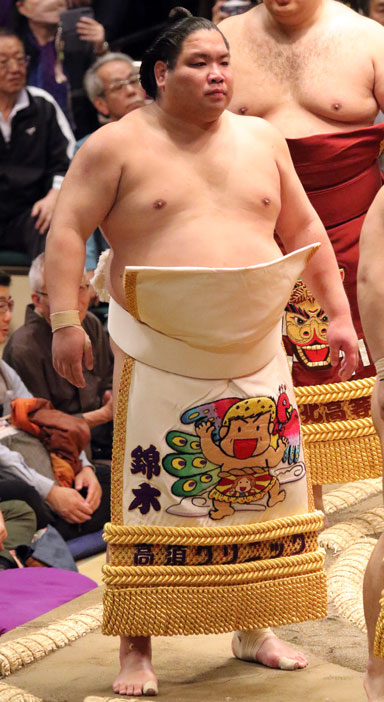
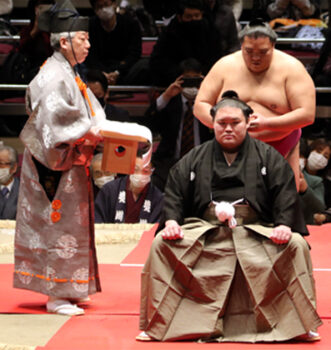
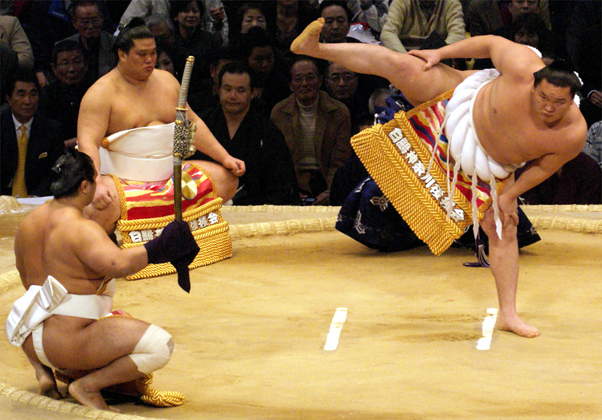
The dohyo-iri is sumo's ring-entering ceremony — a ritual procession the wrestlers perform before the day's top bouts begin. The top-division wrestlers file into the ring together in ornate ceremonial aprons, form a circle, and perform a... -
The Dohyo: Size, Construction and Rituals of the Sacred Sumo Ring
The dohyo is sumo's ring: a clay platform 6.7 metres square and 60 centimetres high, with a fighting circle just over 4.55 metres across. The circle is marked by rice-straw bales half-buried in the clay, the surface is dusted with sand, ... -
Asakusa and Ryogoku: A One-Day Plan for Old Tokyo and Sumo
Tokyo's east side, where the Sumida River curves through the old downtown, lets you fold two very different sides of the city into a single day: the temple-town atmosphere of Asakusa and the sumo world of Ryogoku, the sumo town. Think of...